
A diamond cut alloy repair cost in the UK usually starts at around £150 for a single wheel under 20 inches and climbs quickly with size, lacquer failure and corrosion. On premium OEM wheels, a full set can move into more than £1,000 when all four need work, so the bill is driven by process and finish, not just kerb damage.
The practical question is rarely “is it cheap”. It's whether the wheel needs a re cut, how much metal has already been removed in earlier refurbishments, and whether the lacquer has failed far enough for the face to need full re machining. That's why the same style of wheel can generate very different quotes.
For a clean, direct view of refurbishment pricing and the work involved, see the Alloy Hub refurbishment guide. The Alloy Hub Ltd. handles wheel refurbishment and powder coating from its Staffordshire facility, so the process is controlled in one place rather than pieced together elsewhere.
Table of Contents
- What You Actually Pay for a Diamond Cut Alloy Repair
- How the Diamond Cut Refurbishment Process Works
- How Size, Damage and Lacquer Drive the Price Up
- When OEM Replacement Beats Another Refurbishment
- What to Ask Before You Book the Work
- Diamond Cut Repair Questions UK Drivers Ask
What You Actually Pay for a Diamond Cut Alloy Repair
A typical UK driver is looking at a single diamond cut wheel from around £115 to £150 depending on the source guide and the exact wheel size, while standard alloy refurbishment sits lower because it does not need the same machining step Checkatrade's cost guide RAC advice on refurbishment costs. That gap exists because diamond cut work isn't just a cosmetic refresh. The face is re machined on a CNC lathe, then re lacquered, and that takes more control than a simple spray finish.
What the money is really buying
The quote usually reflects three things. Wheel size changes how long the lathe runs. Damage depth changes how much preparation is needed before cutting starts. Lacquer condition decides whether the face can be refreshed cleanly or has to be fully re worked.
Practical rule: if the quote sounds high, ask what part of the wheel is being cut, what prep is included, and whether corrosion has spread beyond the face.
Standard alloy refurbishment is typically cheaper because the finish is less demanding and the wheel does not need the same re machining control RAC advice on refurbishment costs. Diamond cut work starts from around £150 for wheels under 20 inches and can rise to more than £1,000 if all four wheels need refurbishment RAC advice on refurbishment costs. In practice, that means the price is tied to process complexity, not just the visible scuff.
The Alloy Hub's Staffordshire powder coating facility also carries out diamond cutting in house, which matters because the wheel moves through the same controlled workflow from stripping to re finishing. That kind of setup is what separates a proper workshop refurbishment from a quick cosmetic touch up.
How the Diamond Cut Refurbishment Process Works
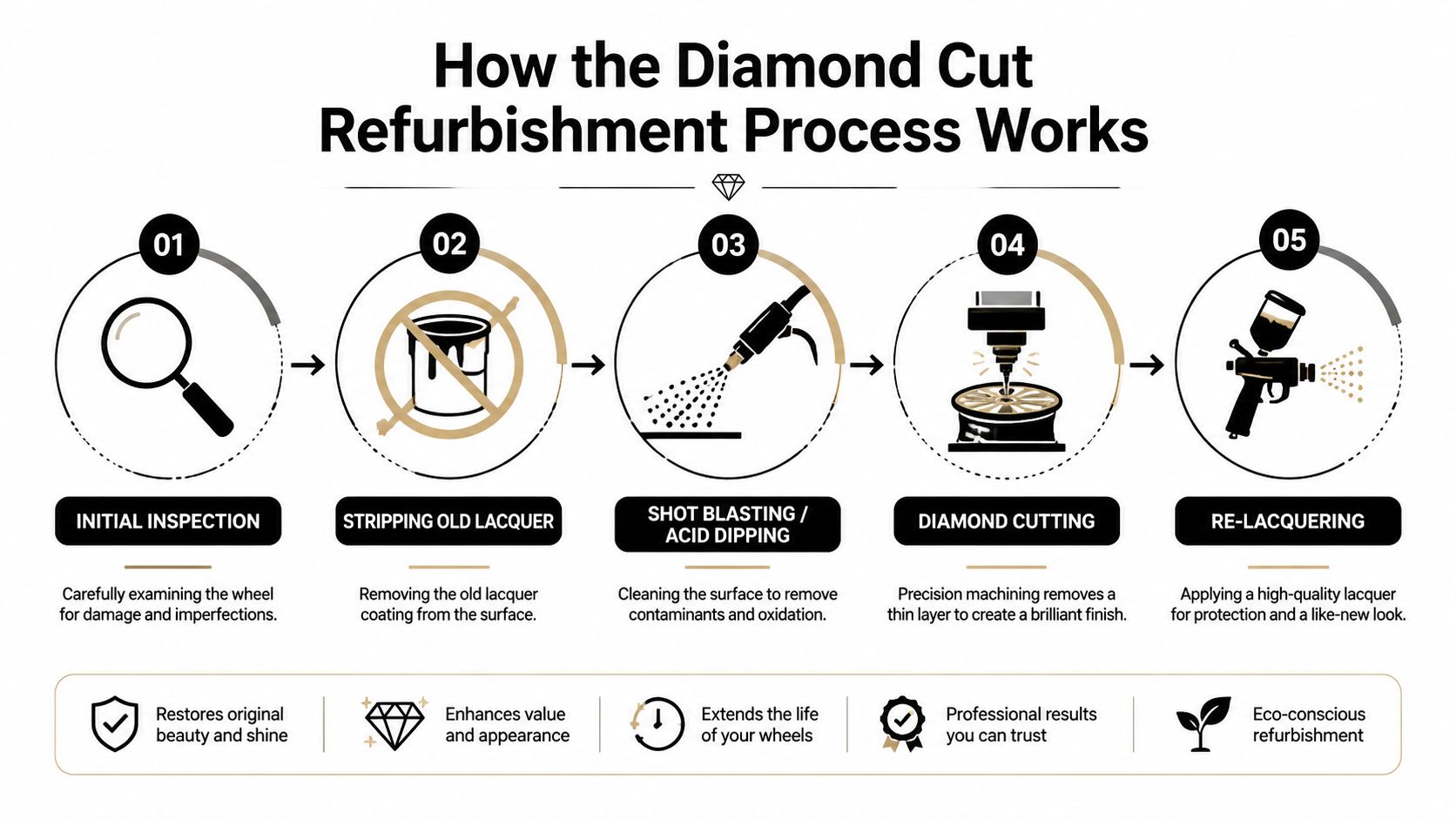
A diamond cut wheel is never just sanded and sprayed. The workshop follows a set order, and every stage adds time, labour, and finishing control to the final bill. Inspection, stripping, preparation, CNC re machining, and re lacquering all affect whether the wheel leaves the shop looking sharp or starts dulling again too soon.
Why the workshop steps matter
The wheel is checked first for damage, corrosion, and earlier repairs. If the lacquer has failed or the face has oxidised, the old coating has to be removed before any cutting begins. That is why a corroded wheel often costs more than a lightly kerbed one. The extra preparation happens before the lathe even touches the face.
If corrosion is present, the wheel may need extra treatment before machining. Autosport Customs notes that cost depends on wheel size, damage level, and whether extra preparation such as acid dipping or corrosion treatment is needed, with a standard diamond cut refurbishment typically costing £100 to £180 per wheel Autosport Customs. That fits the way the work is priced in the trade, because a clean cut depends on what the surface is like before the lathe starts.
The cutting stage happens on a CNC lathe, where the face is skimmed back to restore the machined finish. Larger wheels take longer because the cut has to stay even across a wider face, and the operator has less room for error. After that, the wheel is lacquered and cured to protect the new surface. A workshop that already handles wheel finishing in house, such as the process shown in The Alloy Hub's refurbishment workflow, is better placed to control each stage before the diamond cut is applied.
How Size, Damage and Lacquer Drive the Price Up
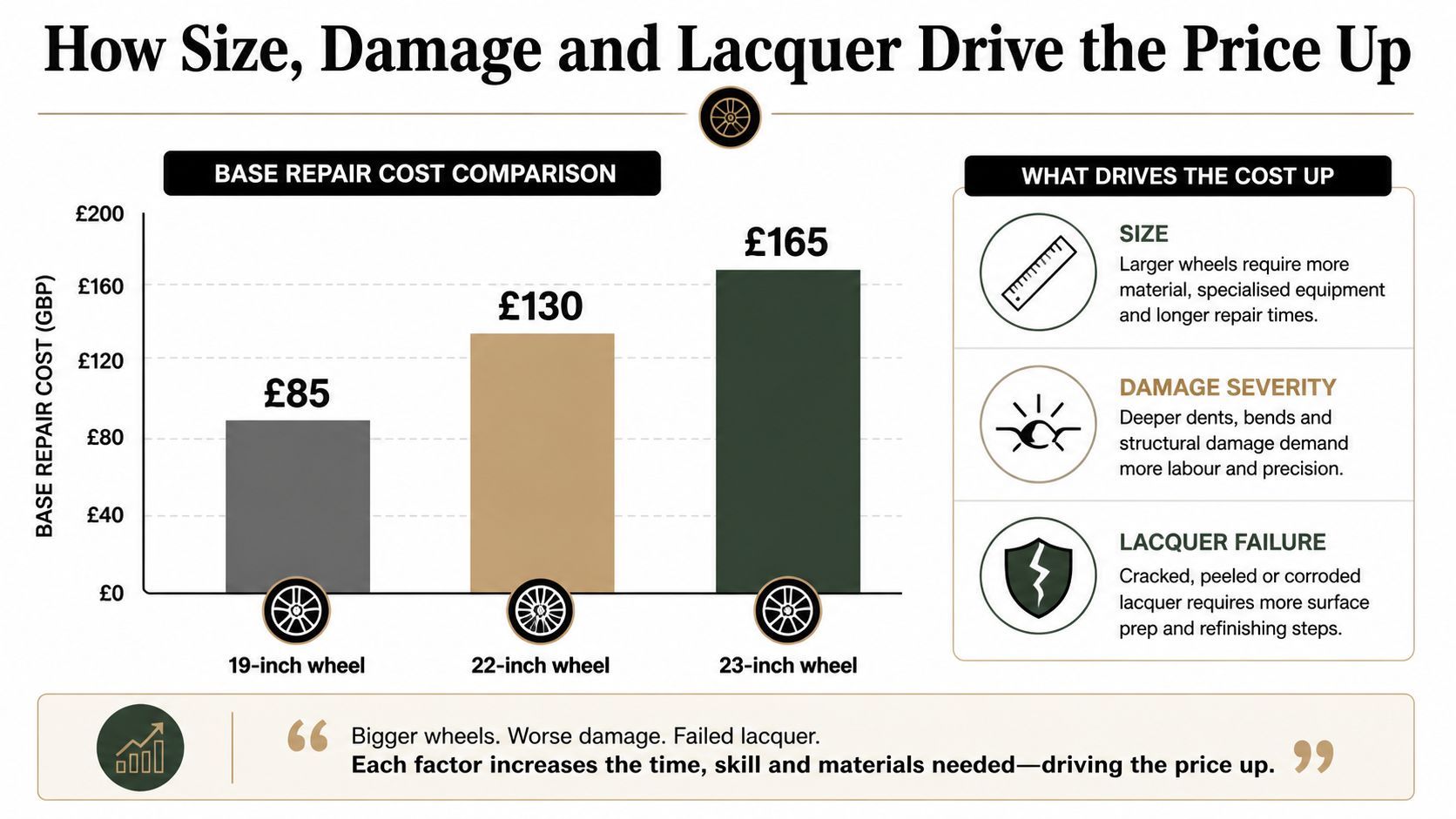
A quote rises for a reason, and wheel size is usually the first one. A 19 inch wheel is generally cheaper to machine than a 22 inch or 23 inch wheel, because the larger face takes more lathe time and demands tighter control to keep the cut even. Bigger faces also need more checking before a workshop is willing to cut them again, especially if the wheel has already seen previous repair work.
Typical UK price bands by size and severity
| Size | Minor repair | Standard refurbishment | Major restoration |
|---|---|---|---|
| 19 inch | £80-£120 | £120-£180 | £180-£250 |
| 21 inch | £80-£120 | £120-£180 | £180-£250 |
| 23 inch | £80-£120 | £120-£180 | £180-£250 |
South Wales Alloys sets out that minor repairs sit at £80-£120 per wheel, standard refurbishment at £120-£180 per wheel, and major restoration at £180-£250 per wheel. It also notes that a set of 4 wheels is often discounted by 10-20% South Wales Alloys cost guide. That discount is worth asking about if all four wheels need attention, because the labour and setup work can often be spread across the job.
Where lacquer failure changes the job
Lacquer failure is a different problem from kerb rash. If the lacquer is peeling, cloudy or lifting on a diamond cut face, a top coat rarely holds for long because the damaged layer has to be stripped back and the surface prepared properly before any fresh finish can go on. That changes the job from a light cosmetic repair into a fuller restoration.
Major restoration is where the extra work shows up. The wheel usually needs the failed lacquer removed, the face cleaned back, corrosion or staining dealt with, and the machining area prepared so the lathe can cut a clean surface again. After that, the wheel still needs new lacquer applied and cured properly. That level of prep is why jobs with lacquer failure tend to land in the £180-£250 band, not the lower repair bands, because the workshop is no longer just touching up the finish, it is rebuilding it.
For a direct comparison between finishes, the powder coated versus painted alloys guide is useful because diamond cut faces behave differently from a simple colour change.
When OEM Replacement Beats Another Refurbishment
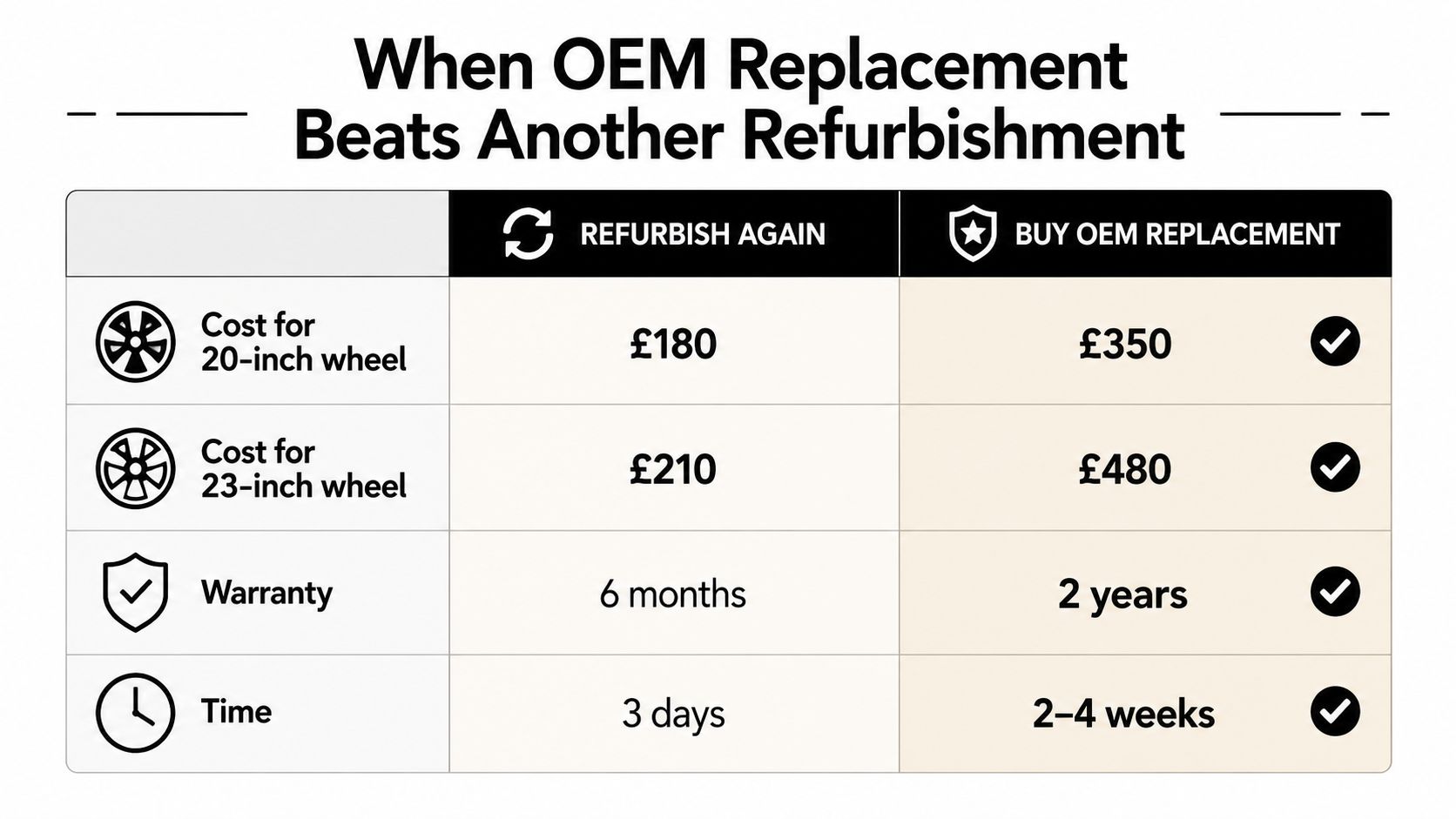
Repair is not always the sensible spend. On premium OEM wheels, especially 20 inch and above, the cost of a full diamond cut refurbishment can get close to the value of a clean genuine replacement wheel, particularly where the factory design is common and available. That is why a wheel should be judged on condition and remaining material, not on the idea that repair is always cheaper.
When the wheel has been cut too many times
Every diamond cut cycle removes a little material. If a wheel has already been machined several times, there may not be enough face left for another clean cut. Bad corrosion can cause the same problem, because the finish may come back cloudy even after the repair is done properly.
The same logic applies when a wheel is badly tired from years of lacquer breakdown. At that point, another refurbishment may only buy time rather than restore the wheel properly. If the face keeps failing, replacement becomes the more honest answer.
A wheel that still has sound structure and a good finish candidate is a better refurbish bet than one that has already been over cut or heavily corroded.
The Alloy Hub's genuine OEM wheel supply and trade in service is the practical route when repair no longer makes sense, because the old wheel can offset part of the replacement decision. That is especially relevant on premium marques such as BMW, Mercedes Benz and Audi, where OEM diamond cut styles are often the wheel a customer is trying to preserve. For OEM wheel matching and factory style options, see The Alloy Hub wheel shop and the Why genuine wheels page.
What to Ask Before You Book the Work
Ask whether the wheel is being repaired in house or sent out. Ask if it is stripped before machining, because a proper diamond cut job relies on clean prep. Ask what lacquer system is used, because a poor top coat will fail early on a machined face.
You should also ask how corrosion is charged and whether the quote covers extra preparation. A single headline figure hides the cost driver, while a written breakdown shows whether the size, damage or lacquer is pushing the price up.
A short booking checklist
- In house or outsourced: Find out where the lathe work is done.
- Strip before cut: Confirm the old finish is removed properly first.
- Lacquer system: Ask what finish is applied after machining.
- Corrosion treatment: Check whether extra prep is included or added later.
- Repeat cuts: Ask how much material remains safe for another refurbishment.
Mobile and DIY diamond cut repair are not realistic substitutes for workshop work because the lathe stage is central to the process. If that stage cannot happen, the result is not a true diamond cut refurbishment.
If you want a straight answer on a specific wheel, use the contact page and give the team the wheel size, finish and condition. That saves time and gets the quote tied to the actual job, not a guess.
Diamond Cut Repair Questions UK Drivers Ask
Why does lacquer fail on diamond cut wheels
Lacquer fails when the protective layer breaks down and moisture reaches the machined face. Once that starts, the finish can turn cloudy, lift or peel. A proper fix usually means stripping the wheel back and re machining the face, not just touching up the surface.
Can a mobile repairer do a diamond cut wheel properly
No, not in the way a workshop lathe process does it. Diamond cut refurbishment depends on CNC re machining, so a driveway touch up is not a true substitute. That's why this kind of work belongs in a controlled refurbishment shop rather than a mobile cosmetic service.
Will insurance usually cover diamond cut damage
Treat this as general guidance rather than a policy rule. Insurers tend to look at the cause of the damage, the excess and whether the wheel is repairable or should be replaced. The exact outcome depends on the policy wording and the claim method chosen.
How many times can a diamond cut wheel be refurbished
There isn't a fixed number you can rely on from the outside. Each cut removes material, so the usable life of the finish depends on how much has already been machined and how much corrosion is present. Once the face is too thin or keeps failing, replacement makes more sense than another cut.
For the full process detail, the refurbishment page at The Alloy Hub Ltd. is the best place to compare the work stages against your wheel's condition.
The Alloy Hub Ltd. supplies genuine OEM alloy wheels and carries out wheel refurbishment, including diamond cutting and powder coating, from its Staffordshire base. If your wheel has kerb damage, corrosion or a failed lacquer finish, call 0330 133 8271 or visit The Alloy Hub Ltd. to talk through the wheel, the finish and whether refurbishment or replacement makes better sense.