Diamond cut alloys are genuine OEM wheels with a precision machined face, created by skimming aluminium on a CNC lathe. A wheel can usually be re cut only two or three times before the face becomes too thin to machine safely.
If you've just kerbed a large Audi, BMW, Mercedes Benz, Jaguar or Range Rover wheel, the bright face doesn't automatically mean it needs replacing. The decision depends on the depth of the damage, corrosion, the wheel's previous repair history and whether enough aluminium remains for another controlled cut.
Table of Contents
- What diamond cut alloys actually are
- How the diamond cut finish is made
- How do diamond cut finishes compare with painted and polished wheels
- Why does diamond cut refurbishment need a workshop
- When should diamond cut refurbishment stop being the right answer
- How should you look after a diamond cut finish through UK winters
- Can The Alloy Hub supply or refurbish a diamond cut OEM wheel
What diamond cut alloys actually are
A diamond cut alloy is a genuine OEM wheel whose visible face has been skimmed on a CNC lathe to expose bright aluminium and create precise concentric machining lines. The process removes a very thin layer from the face rather than applying a bright paint finish, as explained in this diamond cutting finish guide.
The wheel is normally painted or powder coated first. The lathe then machines selected areas, usually the spokes and outer face, while leaving the darker colour in the recessed sections. A clear lacquer is applied afterwards to protect the exposed aluminium from corrosion. That combination gives the sharp contrast commonly associated with premium factory wheels.
A fully painted wheel has colour across its face. A polished wheel has a manually or mechanically polished surface rather than the distinctive lathe cut pattern. Diamond cutting leaves fine, regular lines that follow the geometry of the wheel. On an Audi, BMW, Mercedes Benz, Range Rover or Jaguar, the finish is often found on larger diameter factory option wheels and higher trim designs.
Practical rule: A bright spoke face with fine circular machining lines is likely diamond cut. It isn't simply silver paint.
The finish is an engineering process, not a cosmetic extra. The cutter has to follow the original face accurately, because removing too much material changes the profile and limits future repairs. If you're looking for a genuine replacement rather than another refurbishment, The Alloy Hub's OEM wheel shop supplies genuine wheels for marques including Aston Martin, Audi, Bentley, BMW, Cupra, Ferrari, Ford, Jaguar, Land Rover, Range Rover, Mercedes Benz, Mini, Porsche, Rolls Royce, Skoda, Tesla, Volkswagen and Volvo.
That distinction matters after a heavy kerb strike. A wheel can look repairable from the front while its history makes another cut unsuitable. The face thickness and previous machining record need to be assessed before anyone promises a result.
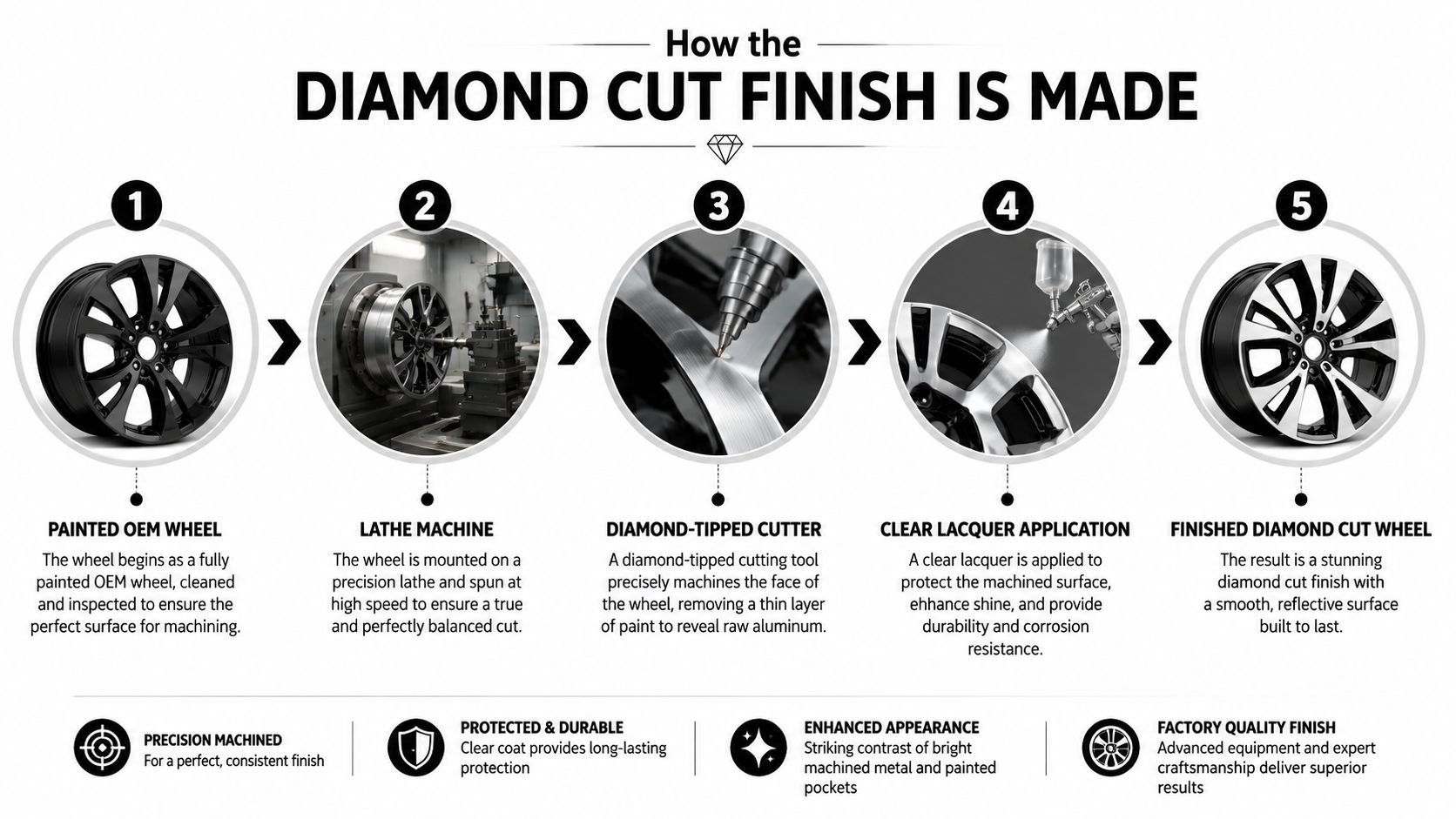
How the diamond cut finish is made
A proper diamond cut refurbishment follows a controlled sequence. The wheel must be stripped, prepared, coated, machined and lacquered in the correct order. It isn't a surface touch up that can be completed while the wheel remains on the car.
Preparation comes before machining
The original coating is removed through chemical stripping and cleaning. Workshop practice may also include blasting to remove corrosion and contamination. This gives the technician a sound surface for inspection and coating.
The wheel is then primed or colour coated, commonly using powder coating. Some UK workshop guidance describes a preheat or de gas stage at about 180 to 200°C, with one process specifying 200°C for 30 minutes before coating. The purpose is to drive trapped gases and contamination from the alloy. If those gases escape during curing, they can create bubbles, peeling or poor adhesion.
Wheels of this design are prepared and coated at The Alloy Hub's Staffordshire powder coating facility, where powder coating and diamond cutting form part of the same refurbishment route.
The lathe creates the visible face
Once the colour layer has cured, the wheel is mounted accurately on a specialist CNC lathe. The machine holds the wheel true and follows the programmed face geometry. The cutter removes approximately 0.2 to 0.5 mm of aluminium from the machined areas, according to independent UK repair guidance at Dent Dash.
That small measurement is the reason repair history matters. The cut may be thin, but it still removes metal every time. A deep kerb mark may also require more preparation before machining, which can reduce the remaining margin further.
The face is then cleaned and covered with protective lacquer. A second curing stage hardens the coating and protects freshly exposed aluminium from moisture and road salt. The diamond cut wheel machining process depends on specialist equipment because the wheel has to be held correctly while the original face is recreated.
How do diamond cut finishes compare with painted and polished wheels
The finish affects both appearance and future repair options. Diamond cut wheels can look exceptionally sharp, but their exposed machined face relies heavily on the lacquer system. A painted or powder coated face has a continuous colour coating over the aluminium, so it doesn't have the same exposed metal pattern.
| Finish | How it is made | Corrosion risk | Repairability | Typical owner situation |
|---|---|---|---|---|
| Diamond cut | A CNC lathe skims the selected face before lacquer is applied | Higher if lacquer is breached, because machined aluminium is exposed | Limited by previous cuts and remaining face thickness | Factory premium finish on an Audi, BMW, Mercedes Benz, Jaguar or Range Rover |
| Fully painted | Colour is applied across the visible wheel face | Generally more forgiving if the coating remains intact | Usually more flexible because there is no machined face to recreate | Owner prioritising a consistent colour and simpler future repairs |
| Powder coated | The old finish is stripped, powder is applied and the wheel is oven cured | Strong preparation and curing help limit peeling and bubbling | Often practical for a colour change or when further cutting is unsuitable | Owner choosing durability and lower maintenance over bright machined lines |
| Polished | The aluminium surface is polished rather than cut in the diamond cut pattern | The surface needs protection and can mark or oxidise if exposed | The original polished appearance can be difficult to reproduce exactly | Older or specialist OEM design where the finish is part of the wheel's character |
Diamond cut and powder coated aren't opposing processes in every case. Powder coating commonly provides the primer and colour layer underneath the machined face. The lathe cuts only the selected areas, then lacquer seals the finished surface.
Why owners change the finish
A wheel that has reached its safe machining limit may be converted to a fully powder coated finish if its condition allows. That removes the need to recreate the machined face and can give the owner a less maintenance sensitive surface.
The trade off is visual. A full colour finish won't reproduce the exact bright spoke contrast of the original factory diamond cut design. It's a deliberate decision between preserving the original appearance and avoiding another removal of aluminium.
UK guidance commonly quotes £80 to £120 per wheel for diamond cut refurbishment, although the actual figure varies with damage, preparation, finish and workshop requirements. Repeated work therefore becomes a material cost as well as an engineering question, rather than an automatic alternative to replacement. See the UK diamond cut refurbishment guide for the typical market context.
Why does diamond cut refurbishment need a workshop
A CNC lathe is the central requirement. The wheel has to be mounted securely and held true while the cutter follows the face. Without that control, the machining lines, spoke edges and depth can vary across the wheel.
The operator also needs to assess the face before cutting. A kerb impact may have removed metal, distorted an edge or left corrosion under the lacquer. The lathe can reproduce a finish, but it can't make an unsafe wheel safe by making it shiny.
Preparation and curing control the result
The coating stages need more than a clean-looking surface. Chemical stripping, blasting, powder priming, colour coating, de gas heating, machining and lacquer curing each affect the next stage. Trapped contamination can release gases during oven curing and create defects beneath the finish.
UK refurbishment practice commonly uses oven curing at about 200°C to harden the coating. Guidance from Smart Wheels describes a multi stage process involving stripping, blasting, powder priming, colour coating, diamond cutting, lacquering and curing.
The Alloy Hub's in house facility controls powder coating and diamond cutting in Staffordshire, giving the wheel a single workshop route for coating, machining and lacquer application.
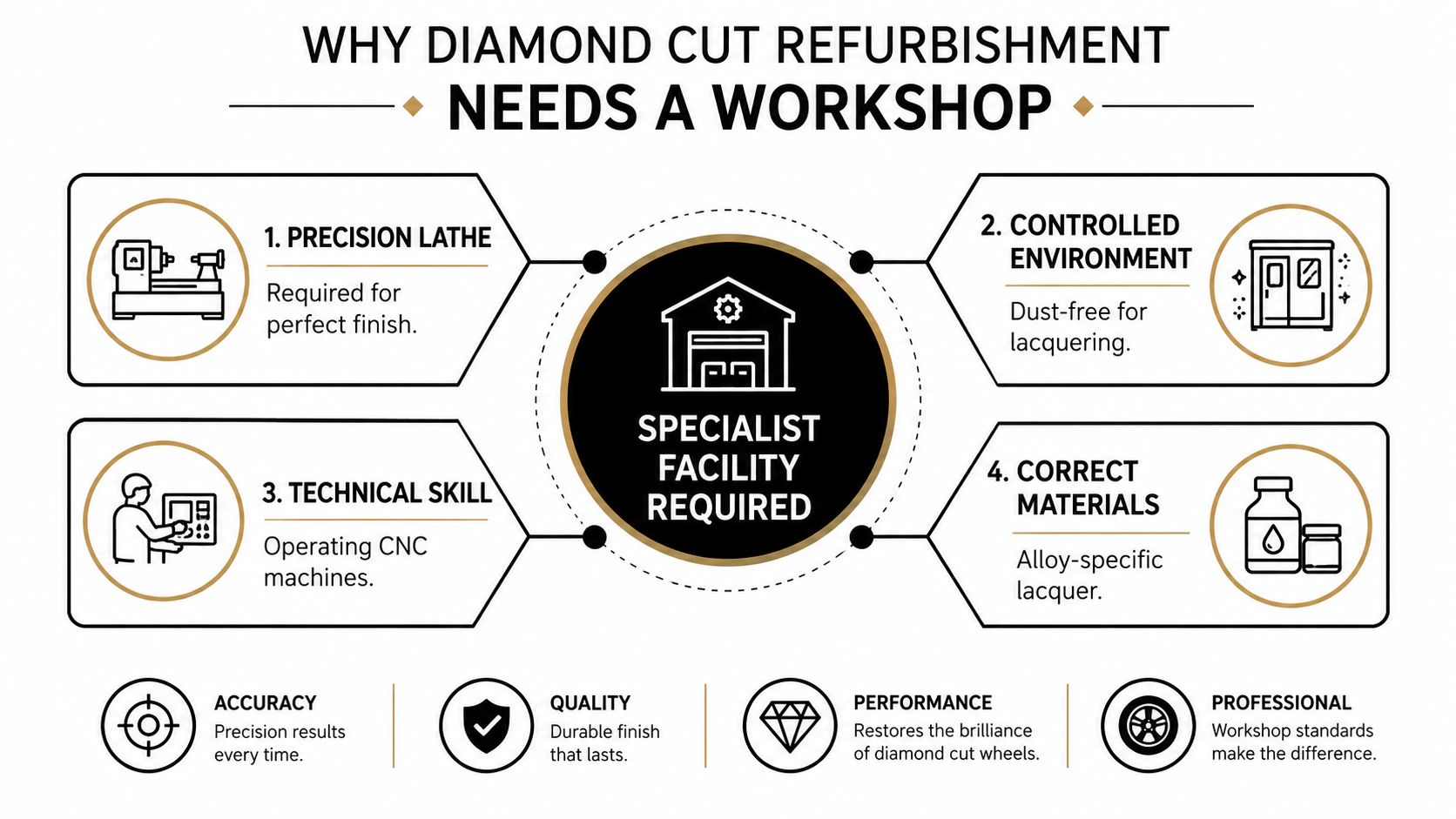
Mobile touch up repairs aren't technically viable for a true diamond cut face because the wheel must be mounted on specialist lathe equipment, as noted in diamond cut refurbishment guidance.
Lacquer failure is particularly visible on this finish. Once the clear coat is breached, water and salt can reach the freshly machined aluminium. White oxidation, cloudy patches and lifting lacquer then spread across the bright face, especially where road contamination remains bonded to the surface.
When should diamond cut refurbishment stop being the right answer
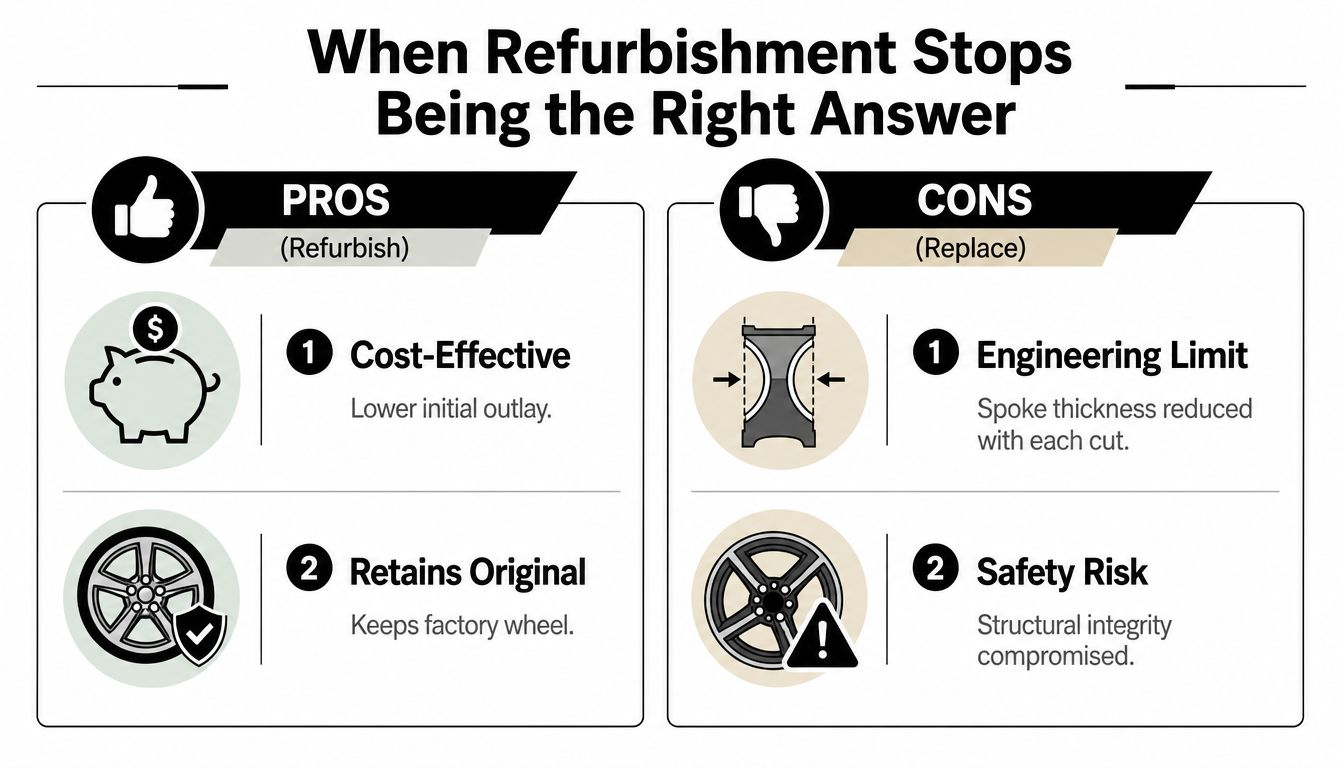
A 20 inch OEM wheel with a kerbed face may still look recoverable, but the deciding factor is remaining sound aluminium. Each diamond cutting pass removes around 0.2 to 0.5 mm. Common UK guidance puts the practical limit at two or three cuts, after which further machining can remove too much metal from the face. These figures are general guidance, so the wheel's design, damage and repair history still need inspection.
A wheel cut twice needs a careful assessment before another job is approved. It may have enough material for one more controlled cut, or it may be better suited to a different finish or replacement. Deep kerb damage, widespread pitting and corrosion beneath lifting lacquer can also make diamond cut refurbishment unviable. For a breakdown of the cost factors, see this guide to diamond cut alloy repair cost.
The decision depends on history
Check these points before authorising another cut:
- Previous machining: Establish whether the face has already been diamond cut and how many times.
- Kerb depth: A shallow cosmetic mark differs from damage reaching the spoke edge or rim structure.
- Corrosion: White oxidation and pitting beneath lacquer can prevent a clean, durable finish.
- Structural condition: Buckles, cracks and impact damage need technical assessment before cosmetic work.
- Original specification: Confirm diameter, width, PCD, offset, centre bore and load rating before selecting a replacement.
A wheel that has reached its machining limit shouldn't be cut again simply because the face still looks recoverable.
Replacement with a like for like genuine OEM wheel is often the safer specification driven option when the original face has been repeatedly cut or badly damaged. UK wheel fitment depends on PCD, offset, diameter and width. PCD is the pitch circle diameter of the fixing holes. Offset describes the wheel's mounting position relative to its centre line. Those measurements must match the vehicle's hub and suspension geometry.
A genuine OEM replacement also needs the correct load rating, TPMS compatibility and staggered setup. Wheels that look identical are not automatically interchangeable. The case for a genuine OEM wheel is strongest once the damaged original has reached the end of its refurbishable life. Replicas should not be treated as substitutes for the correct factory specification.
How should you look after a diamond cut finish through UK winters
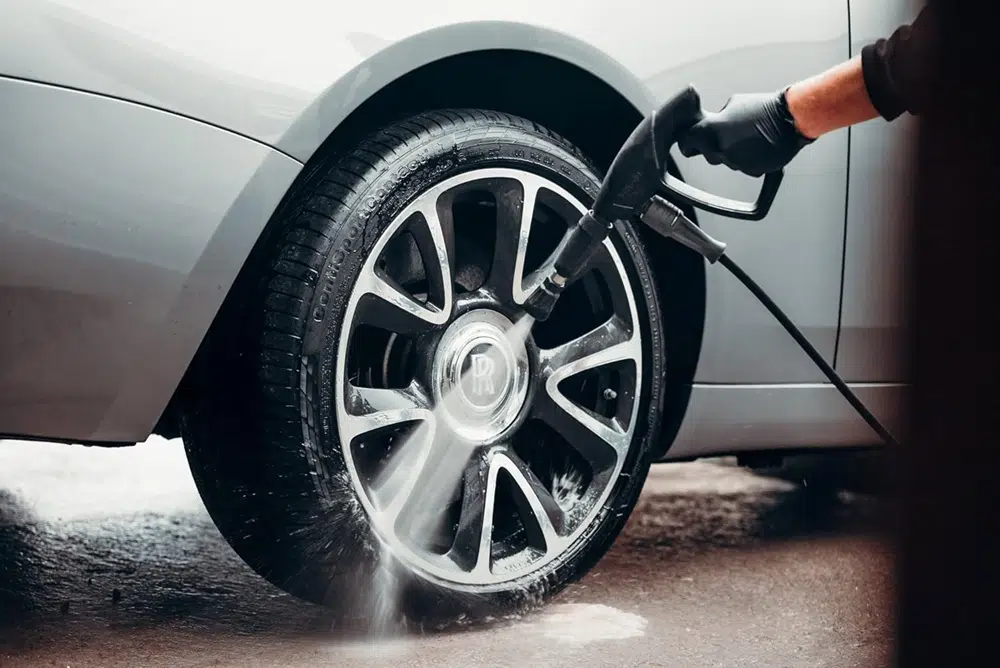
Regular cleaning is the most useful protection for a diamond cut face. Brake dust, salt and road film can remain bonded to the lacquer, and that contamination increases the chance of staining or coating deterioration.
Use a pH neutral wheel cleaner with a soft brush. Avoid acidic cleaners and don't leave fallout removers sitting on the surface for longer than the product instructions allow. A dedicated wheel wax or sealant can add a sacrificial layer, but it won't repair lacquer that has already lifted.
Inspect the lacquer, not just the spokes
Look closely when the wheel is clean and dry. The warning signs include:
- Clouding: A hazy patch beneath the clear coat can indicate coating deterioration.
- White oxidation: Chalky marks around the cut face suggest moisture has reached the aluminium.
- Lifting edges: Peeling or bubbling lacquer needs refurbishment rather than more cleaning.
- Pitting: Small cavities under the coating can prevent a smooth repeat finish.
- Hairline cracks: Cracks around bolt holes require assessment before the wheel is used further.
Winter salt accelerates the failure pattern because it keeps the face contaminated and promotes corrosion beneath damaged lacquer. A regular wash removes the material before it bonds firmly. Owners also concerned about salt reaching other exposed vehicle areas may find this guide to protecting your vehicle's underside useful.
A wheel with intact lacquer needs maintenance. A wheel with active lifting, oxidation or pitting needs a condition assessment. The alloy wheel refurbishment service gives owners a route to have the finish evaluated rather than repeatedly trying to clean away a coating failure.
For broader seasonal factors affecting wheel coatings, see how weather affects your alloy wheels. Don't treat a visible corrosion patch as a purely cosmetic nuisance if the wheel has a long repair history.
Can The Alloy Hub supply or refurbish a diamond cut OEM wheel
The Alloy Hub Ltd. supplies genuine OEM alloy wheels as singles and sets, and it handles suitable refurbishment and powder coating at its Staffordshire base in Leek. The company was founded in 2013 by Joe Stonier and provides UK nationwide delivery and worldwide export from Middle Hulme Grange, Meerbrook, Leek, Staffordshire ST13 8SW.
Its wheel work covers genuine OEM designs for Aston Martin, Audi, Bentley, BMW, Cupra, Ferrari, Ford, Jaguar, Land Rover, Range Rover, Mercedes Benz, Mini, Porsche, Rolls Royce, Skoda, Tesla, Volkswagen and Volvo. The practical value of that route is specification control. A replacement decision needs the correct diameter, width, PCD, offset, centre bore, load rating and finish, not just a similar photograph.
Refurbish the right wheel, replace the wrong candidate
Suitable diamond cut wheels can be stripped, powder coated, machined and lacquered through the in house process. Wheels that have exceeded their safe machining margin, suffered deep damage or developed extensive corrosion may be better replaced with a like for like OEM wheel.
The business can supply a single wheel to match an existing set or provide a complete set where the condition and appearance of multiple wheels need to be consistent. It also accepts existing wheels in part exchange where appropriate. Replicas aren't presented as an acceptable option when genuine OEM fitment is required.
If your 20 inch OEM wheel has kerb damage, don't approve another cut until its previous machining and remaining face condition have been checked. Contact The Alloy Hub Ltd. on 0330 133 8271 or email sales@alloyhub.com with the wheel and vehicle details for a refurbishment or genuine OEM replacement discussion.
Frequently asked questions
Can diamond cut alloys be cut again after one refurbishment
Usually, yes, provided the wheel has sufficient remaining face thickness and the previous work was controlled. UK guidance commonly limits diamond cut wheels to about two or three re cuts in total, but the safe decision depends on wheel design, damage depth and repair history. A specialist must inspect the wheel before confirming that further machining is suitable.
Is a diamond cut wheel stronger than a painted wheel
The diamond cut process describes the finish, not a higher structural strength rating. The wheel still needs to meet the vehicle's specification for load rating, diameter, width, PCD and offset. Repeated machining removes aluminium from the face, so a wheel with extensive previous cutting may need replacement or a different finish.
Can corrosion under diamond cut lacquer be repaired
Corrosion can sometimes be addressed during a full refurbishment if the wheel retains enough sound material and the affected areas can be properly prepared. Lifting lacquer, white oxidation and pitting are warning signs that cleaning alone won't solve the problem. If the face has been cut repeatedly or the damage is deep, replacement may be the safer route.
Should a damaged 20 inch BMW wheel be refurbished or replaced
A 20 inch BMW wheel should be assessed rather than judged by size or appearance alone. Shallow cosmetic damage with sufficient face thickness may be suitable for refurbishment. Deep kerbing, cracks, buckles, heavy corrosion or a history of two or three previous cuts can make a genuine OEM replacement more appropriate.
Can one diamond cut wheel be matched to an older set
A single genuine OEM wheel can be matched to an existing set by checking its design, part identification, size, finish and condition. Exact visual matching can be difficult if the other wheels have aged or been refurbished differently. The supplier should confirm fitment and discuss whether one wheel or a complete set is the sensible choice.
{ “@context”: “https://schema.org”, “@type”: “BlogPosting”, “headline”: “Diamond Cut Alloys Explained: Maintenance Guide”, “description”: “Diamond cut alloys can usually be re cut two or three times. Learn how CNC machining, lacquer failure and wheel history decide refurbishment or OEM replacement.”, “author”: { “@type”: “Organization”, “name”: “The Alloy Hub Ltd.” }, “publisher”: { “@type”: “Organization”, “name”: “The Alloy Hub Ltd.” }, “mainEntityOfPage”: { “@type”: “WebPage”, “@id”: “https://www.alloyhub.com” } }{ “@context”: “https://schema.org”, “@type”: “FAQPage”, “mainEntity”: [ { “@type”: “Question”, “name”: “Can diamond cut alloys be cut again after one refurbishment”, “acceptedAnswer”: { “@type”: “Answer”, “text”: “Usually, yes, provided the wheel has sufficient remaining face thickness and the previous work was controlled. UK guidance commonly limits diamond cut wheels to about two or three re cuts in total, but the safe decision depends on wheel design, damage depth and repair history. A specialist must inspect the wheel before confirming that further machining is suitable.” } }, { “@type”: “Question”, “name”: “Is a diamond cut wheel stronger than a painted wheel”, “acceptedAnswer”: { “@type”: “Answer”, “text”: “The diamond cut process describes the finish, not a higher structural strength rating. The wheel still needs to meet the vehicle’s specification for load rating, diameter, width, PCD and offset. Repeated machining removes aluminium from the face, so a wheel with extensive previous cutting may need replacement or a different finish.” } }, { “@type”: “Question”, “name”: “Can corrosion under diamond cut lacquer be repaired”, “acceptedAnswer”: { “@type”: “Answer”, “text”: “Corrosion can sometimes be addressed during a full refurbishment if the wheel retains enough sound material and the affected areas can be properly prepared. Lifting lacquer, white oxidation and pitting are warning signs that cleaning alone won’t solve the problem. If the face has been cut repeatedly or the damage is deep, replacement may be the safer route.” } }, { “@type”: “Question”, “name”: “Should a damaged 20 inch BMW wheel be refurbished or replaced”, “acceptedAnswer”: { “@type”: “Answer”, “text”: “A 20 inch BMW wheel should be assessed rather than judged by size or appearance alone. Shallow cosmetic damage with sufficient face thickness may be suitable for refurbishment. Deep kerbing, cracks, buckles, heavy corrosion or a history of two or three previous cuts can make a genuine OEM replacement more appropriate.” } }, { “@type”: “Question”, “name”: “Can one diamond cut wheel be matched to an older set”, “acceptedAnswer”: { “@type”: “Answer”, “text”: “A single genuine OEM wheel can be matched to an existing set by checking its design, part identification, size, finish and condition. Exact visual matching can be difficult if the other wheels have aged or been refurbished differently. The supplier should confirm fitment and discuss whether one wheel or a complete set is the sensible choice.” } } ] }The Alloy Hub Ltd. supplies genuine OEM diamond cut wheels as singles and sets, and assesses suitable wheels for powder coating and diamond cut refurbishment at its Staffordshire facility. Visit The Alloy Hub Ltd. to discuss whether your damaged wheel should be refurbished or replaced with the correct genuine OEM specification.