If the clear face on your BMW, Audi or Range Rover wheel has turned milky, bubbled or started lifting, the lacquer seal has probably failed. Diamond cut alloy wheel lacquer protects freshly machined aluminium from moisture, salt and grit. Once that seal is breached, early refurbishment may save the wheel, but deep pitting or widespread lifting can make a genuine OEM replacement the more sensible decision.
Table of Contents
- What Diamond Cut Alloy Wheel Lacquer Actually Does
- Which Lacquer Systems Are Used on UK Diamond Cut Wheels
- How Does Lacquer Fail on a Diamond Cut Wheel
- What Does a Proper Re Lacquering Job Involve
- Should You Refinish or Replace a 19 Inch BMW Wheel
- How Can You Protect Lacquer on UK Diamond Cut Wheels
- Where Can You Source OEM Diamond Cut Wheels or Refurbishment
What Diamond Cut Alloy Wheel Lacquer Actually Does
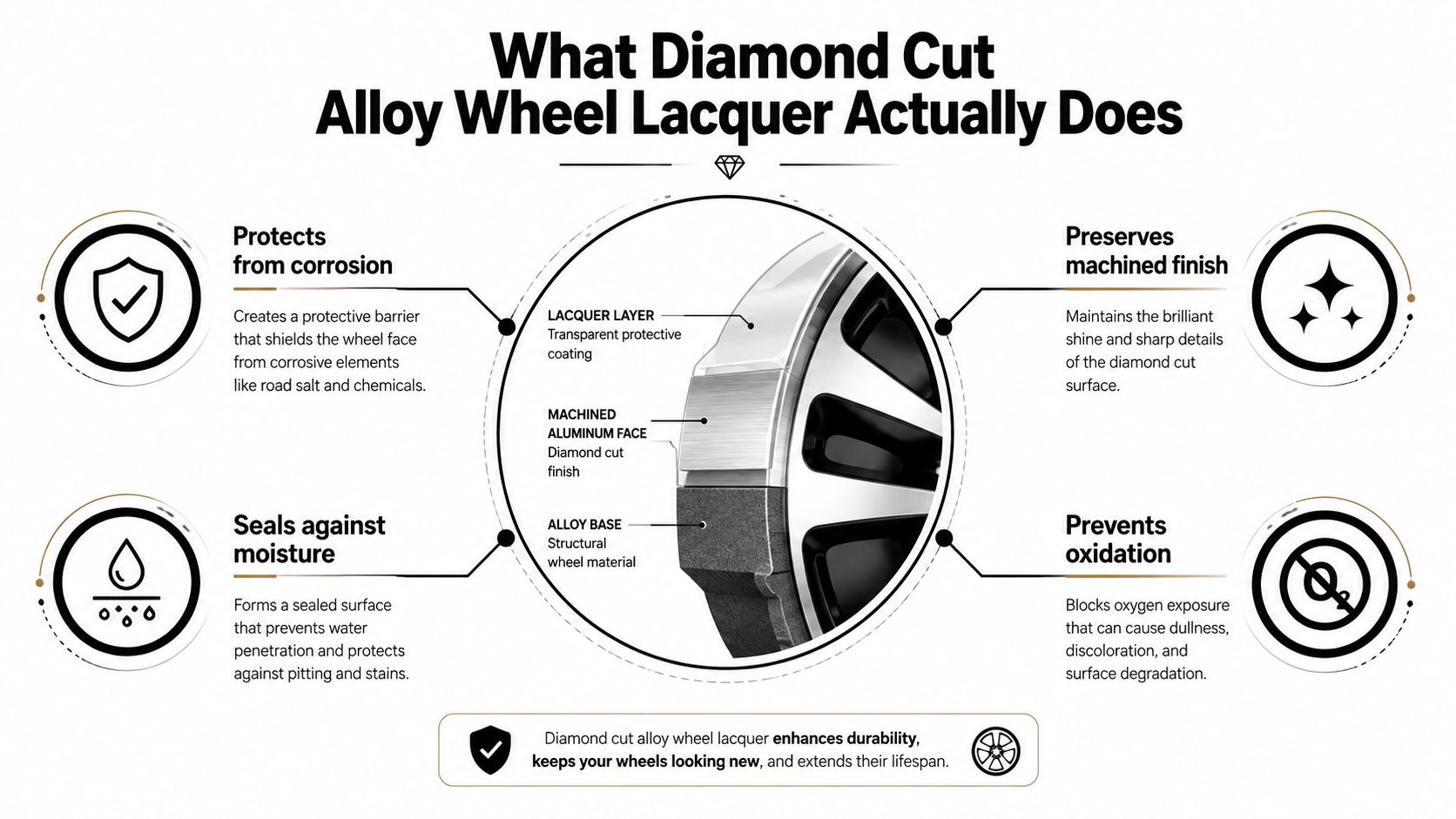
Diamond cut alloy wheel lacquer is the final clear coat applied after the wheel face has been machined. A lathe removes a thin layer of alloy from the face, exposing bright aluminium and creating the sharp contrast associated with many OEM finishes. The exposed face then needs sealing, and the lacquer is applied and baked after application as part of the finishing process. UK diamond cutting guidance describes this as the standard process for a diamond cut finish.
The lacquer has a specific job. It forms a barrier between freshly cut aluminium and the conditions found on British roads, including rain, road salt, grit and repeated wet and dry cycles. Bare aluminium is vulnerable, while the machined face is difficult to coat effectively once it has been cut, so a sound clear layer is central to the wheel's service life.
Practical rule: The bright machined surface isn't protected by its appearance. It's protected by the integrity of the clear lacquer over it.
A wax or polish can't replace that coating. Surface products may change how the wheel looks or make washing easier, but they don't rebuild a breached lacquer film or stop moisture travelling beneath it. If you can see a chip, lifted edge or white marking under the clear coat, the useful response is inspection rather than another layer of cosmetic product.
Why OEM wheels receive this finish
Marques including BMW, Audi, Mercedes Benz, Porsche and Range Rover use diamond cut faces on selected genuine OEM wheel designs because machining gives the face a bright, precise appearance. The process isn't a permanent treatment, though. Lacquer is a serviceable part of the finish system, with a finite life that depends on damage, preparation, coating quality and road exposure.
That distinction matters if one wheel in a set has failed. The right decision may be a complete refurbishment, a change to a powder coated finish or a matching genuine OEM replacement. The wheel's design, material condition and previous machining history all need checking before anyone promises that a simple re lacquer will solve the problem.
Which Lacquer Systems Are Used on UK Diamond Cut Wheels
A workshop may encounter more than one clearcoat system on a diamond cut OEM wheel. The important point is adhesion to the freshly exposed aluminium and the preparation beneath it. A clear product applied over contamination, corrosion or an unstable old finish won't become reliable because it looks glossy when it leaves the workshop.
UK refurbishment guidance describes an acrylic lacquer applied after machining and baked as part of the finishing process. Supplier information also identifies direct to metal, two pack systems, meaning a clearcoat mixed with a separate hardener and sometimes thinner, formulated to adhere to bare aluminium. These are coating systems, not generic household varnishes.
| System | Typical application | Bonding surface | Notes for UK use |
|---|---|---|---|
| Baked acrylic lacquer | Applied after the diamond cut face has been machined | Prepared exposed aluminium and the surrounding finish | Requires thorough stripping and preparation before the final bake |
| Direct to metal two pack clearcoat | Used where the coating system is designed to bond directly to bare aluminium | Freshly prepared aluminium | Hardener and thinner form part of the specified system, so mixing and application must follow the product process |
Product information for UK diamond cut coatings includes a 7 litre clear coat kit priced at £145.00, while another listed system comprises 5 litres of clearcoat, 1 litre of hardener and 1 litre of thinner and is described as suitable for direct adhesion to bare aluminium. Those figures describe supplier products, not a refurbishment quote from The Alloy Hub, and they shouldn't be used to estimate the finished cost of a wheel.
Some factory wheels have only one lacquer layer, according to UK wheel finish guidance. A single layer isn't automatically defective, but it leaves little room for careless preparation or prolonged exposure after a chip. Owners comparing protection approaches for other painted surfaces may find this compare car paint protection Perth resource useful, although those products don't replace proper wheel refurbishment.
What the system can't correct
Neither lacquer type can hide deep corrosion, restore missing aluminium or repair a cracked wheel. The coating can only protect a properly prepared surface. If the face has already suffered extensive pitting, the technician may need to re machine it, convert the finish or recommend replacement after inspection.
How Does Lacquer Fail on a Diamond Cut Wheel
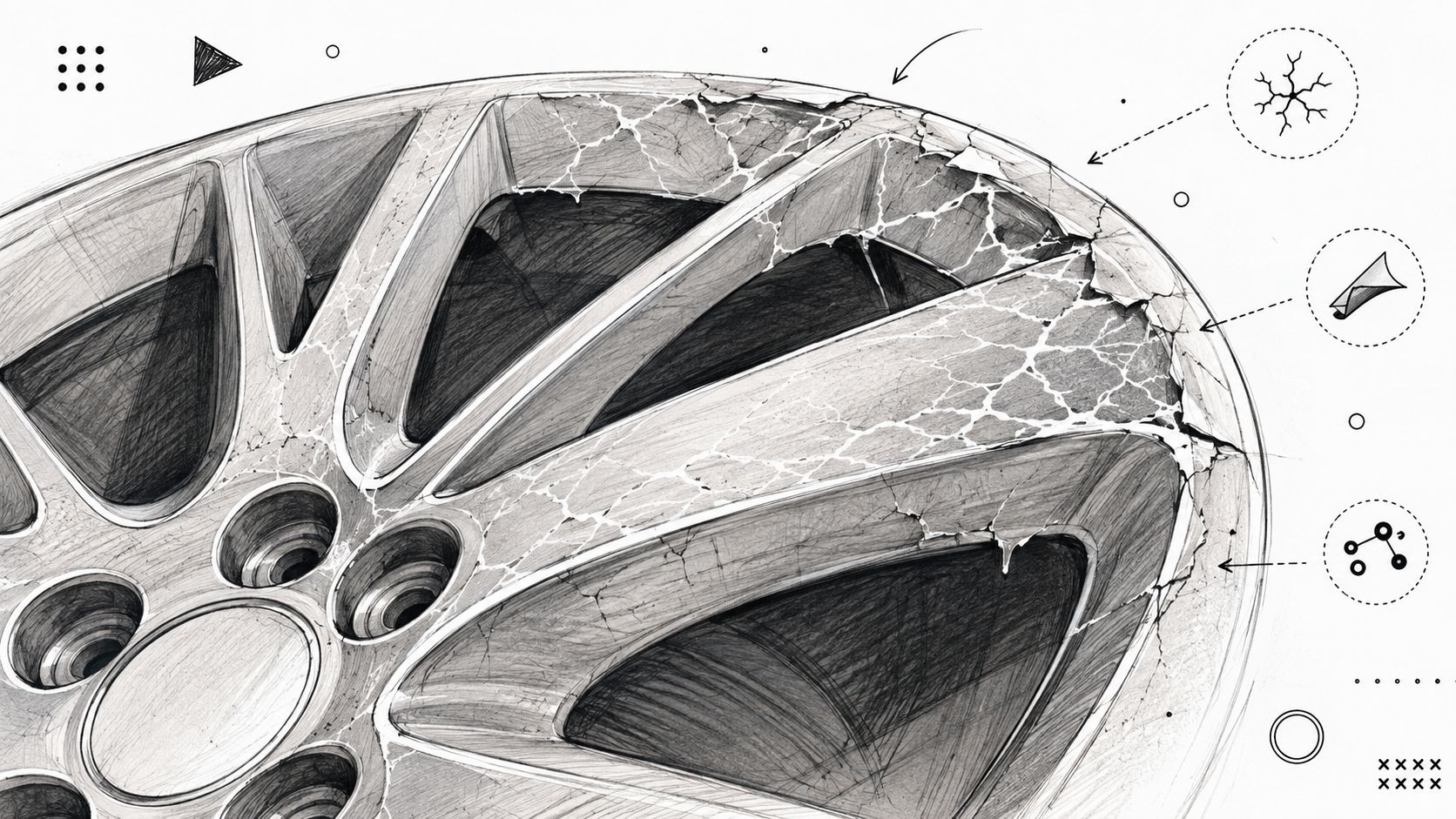
The first sign is often a small white mark near a spoke edge or on the rim flange. The wheel may still look presentable from a distance, but close inspection shows milky veining, bubbling or worm like lines beneath the clear coat. These marks indicate that moisture has moved under a breached lacquer layer and corrosion is spreading laterally beneath the surface. UK corrosion guidance describes this filiform corrosion pattern on diamond cut wheels.
A stone chip or kerb rash commonly creates the entry point. The impact breaks the lacquer, then water and road salt reach the bare aluminium. Frequent wet and dry cycling keeps moving contamination through the damaged area, while strong wheel cleaners can accelerate deterioration if they attack an already weakened coating.
Where owners usually notice it
Spoke tips and edges take impacts first because they sit proud of the face. The outer flange is also exposed to kerbs, grit and water thrown from the road. Once a small area lifts, the surrounding clear coat can lose its bond and produce a dull patch or peeling edge.
A dull area doesn't always mean the metal has disappeared. It can indicate surface oxidation beneath the lacquer, chemical marking or a coating that has lost clarity. Visual inspection alone can't establish how much the aluminium is pitted, so scraping or polishing the area can make the damage harder to assess.
Don't treat bubbling as a cleaning problem. If corrosion is under the clear coat, cleaning the outside won't remove the cause.
Early damage may be recoverable through stripping and refinishing. Once corrosion has spread widely, the lacquer has lifted across several spokes or the pitting is deep, the face may need substantial re facing or the wheel may no longer be economical to save. The visible defect is cosmetic, but the repair decision depends on the condition beneath it.
What Does a Proper Re Lacquering Job Involve
A proper re lacquer is not a quick clearcoat top up. The old finish has to be removed so the technician can see the aluminium, assess corrosion and establish whether the face is suitable for another diamond cut. UK refurbishment workflows describe tyre removal, chemical stripping, preparation, powder coating, CNC cutting, acrylic lacquer application and baking as connected stages rather than separate cosmetic tricks. Independent refurbishment process guidance sets out this multi stage approach.
The process behind the clear finish
A sound workflow normally follows this order:
- Inspect the wheel. The technician checks the face, barrel and structure for cracks, buckles, corrosion and previous repairs.
- Remove the tyre. This gives access to the complete wheel and prevents the coating process compromising the tyre.
- Strip the existing finishes. Chemical removal and suitable surface preparation expose old lacquer, paint and corrosion.
- Prepare the alloy. Kerb damage is removed and the surface is made ready for the coating system. Powder primer and base coat may be applied to the relevant areas.
- Re cut the face. If the original diamond cut appearance is being restored, a CNC lathe removes the necessary surface material from the prepared face.
- Apply and cure the lacquer. The clearcoat is the final protective stage, followed by baking or curing before the wheel is cooled and refitted.
The full operation is often completed over about 3 days, depending on the provider and the work required. UK service information also describes cleaning, powder coating, CNC cutting and a final lacquer stage, which reinforces the practical point: the lacquer isn't an isolated repair.
At The Alloy Hub's Staffordshire powder coating facility, wheels of this design are handled through the refurbishment process rather than treated as a surface spray job. The diamond cutting equipment and process are described on the diamond cut wheel machining page.
The same principle applies beyond wheels. Product repair work is usually judged by diagnosis, preparation and controlled reassembly, not by the final visible coating alone. The repair data for fashion brands offers useful wider context on why a repair record should describe the work carried out, not just the appearance at collection.
Should You Refinish or Replace a 19 Inch BMW Wheel
A failed lacquer doesn't automatically condemn a genuine OEM wheel. It also doesn't guarantee that refurbishment is sensible. The decision turns on the extent of corrosion, the structural condition, the remaining face material and whether the finished wheel will provide a durable seal.
Damage that can justify refinishing
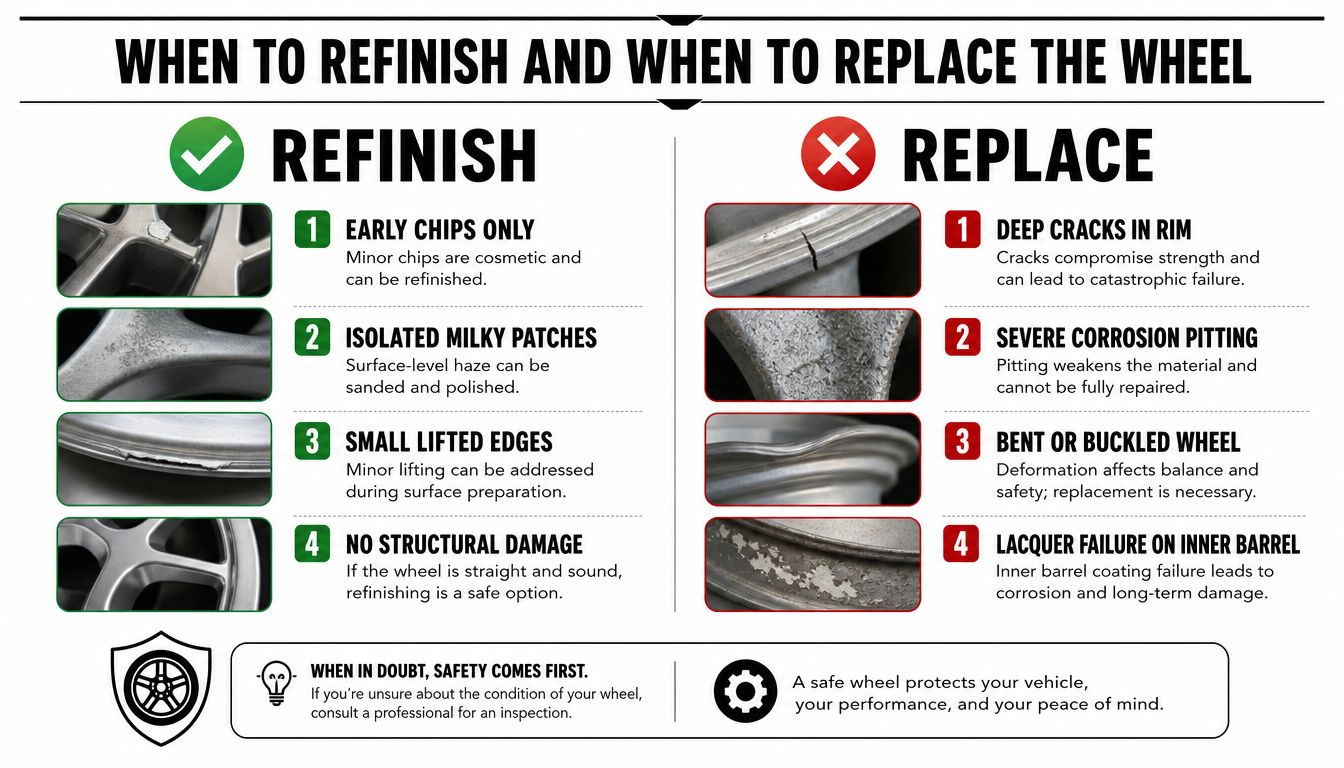
Early chips, isolated milky patches and small lifted edges are often suitable for stripping and refinishing, provided the underlying aluminium remains sound. A technician can assess the wheel after the old coating is removed, which is why an online photograph isn't always enough for a firm decision.
A wheel with no structural damage and limited surface corrosion has a clearer route to refurbishment. The work may include preparing the face, removing kerb damage, restoring the surrounding powder coated areas, machining the face and applying fresh lacquer. The finish can then be assessed as a complete system rather than a patched section.
Damage that points towards replacement
Deep pitting changes the calculation. So does corrosion spread beneath several spokes, extensive lacquer lifting or a wheel with a history of repeated re machining. Each diamond cut removes material from the face, so previous cuts matter. A responsible inspection must consider whether another cut can restore the finish without taking the face beyond a safe condition.
| Inspection finding | More likely route | Reason |
|---|---|---|
| Isolated chip with sound surrounding alloy | Refinish | The breach may be local and the face may remain suitable |
| White veining across a limited area | Inspect, then refinish if viable | Corrosion depth is not confirmed from the appearance alone |
| Deep pitting or broad lateral corrosion | Replace or change finish | A durable seal may require extensive material removal |
| Crack or significant buckle | Replacement assessment | Cosmetic lacquer work doesn't resolve structural damage |
| One failed wheel in an aged set | Match with a genuine OEM single or refurbish the set | Colour, design and finish consistency need checking |
Refurbishment pricing published by UK independent businesses shows that single wheel diamond cut work is listed at £95, with full refurbishment listed at £400 for 16, 17 and 18 inch wheels, £450 for 19 and 20 inch wheels, £495 for 21 and 22 inch wheels. These are market benchmarks from the referenced business, not prices from The Alloy Hub, and size and complexity affect the final quote. UK published refurbishment benchmarks
For a 19 inch or 20 inch BMW or Range Rover set, replacing one wheel can be the practical answer if the damaged face has already been cut repeatedly or the corrosion has become deep. The Alloy Hub can source genuine OEM singles and sets, so the owner isn't forced to fit a replica simply because one original wheel has gone beyond saving. See the wheel refurbishment cost guide for the information needed when requesting an assessment.
How Can You Protect Lacquer on UK Diamond Cut Wheels
Fresh lacquer still needs sensible care. Winter salt, grit and repeated wet to dry changes are hard on a breached coating, and harsh chemistry can shorten the useful life of a sound one.
Use these habits:
- Choose pH neutral cleaner. It is the safer default for a clear coated diamond cut face.
- Don't leave acidic fallout products sitting on the wheel. Rinse them away promptly if they're used as part of an appropriate cleaning process.
- Dry the face after washing. Standing water can carry salt and contamination into tiny coating defects.
- Repair stone chips early. A small breach is easier to assess before white corrosion spreads under the lacquer.
- Store the car indoors through winter where possible. Reducing exposure to salt, grit and persistent damp helps limit the conditions that drive corrosion.
- Ask for a coating inspection when the wheel is removed. The technician can check the inner barrel, spoke edges and face rather than judging only the visible front surface.
Don't polish aggressively into a milky patch. That can remove surrounding lacquer while leaving the corrosion underneath. Likewise, a strong wheel cleaner intended for other painted finishes isn't automatically appropriate for a diamond cut face.
For owners considering a finish that is easier to maintain, a full powder coated colour change can remove the exposed machined face from the equation. The choice depends on whether preserving the original OEM appearance matters more than selecting a more durable painted finish. Wheel refurbishment options from The Alloy Hub cover that decision in the context of genuine OEM wheels.
Where Can You Source OEM Diamond Cut Wheels or Refurbishment
The practical choice is usually clear after inspection. If the corrosion is limited and the face has enough material, a full strip, preparation, re cut and lacquer process can restore the OEM design. If the face is pitted, structurally damaged or unsuitable for further machining, a matching genuine wheel avoids spending money on a finish that may fail again.
The Alloy Hub Ltd. supplies genuine OEM alloy wheels as singles and sets for marques including Aston Martin, Audi, Bentley, BMW, Cupra, Ferrari, Ford, Jaguar, Land Rover, Range Rover, Mercedes Benz, Mini, Porsche, Rolls Royce, Skoda, Tesla, Volkswagen and Volvo. Replicas aren't presented as an acceptable substitute for a genuine wheel where correct design, specification and matching matter.
The business also carries out wheel refurbishment and powder coating from its facility in Leek, Staffordshire, founded in 2013 by Joe Stonier. UK nationwide delivery and worldwide export are available for wheel supply. For a replacement, the team needs to confirm the vehicle and wheel specification, including diameter, width, PCD, offset, centre bore, load rating, TPMS arrangement and whether the car uses a staggered setup.
A quote should identify whether the wheel needs cosmetic refurbishment, diamond cutting, powder coating, buckle assessment or replacement. It should also state whether one genuine OEM wheel can be matched to the existing set, rather than assuming that an identical looking design has the same specification.
The four questions below cover the points most owners ask before booking an assessment.
Can a wax repair failed diamond cut lacquer?
No. Wax may add temporary surface protection, but it can't rebuild lacquer or stop corrosion beneath a breached clear coat. White veining, bubbling and lifting need inspection because the technician must establish whether the aluminium is lightly affected or significantly pitted before choosing refurbishment or replacement.
Is diamond cut lacquer stronger than paint?
Lacquer protects the machined face, but it doesn't make that face immune to damage. The exposed aluminium and clear seal remain vulnerable to chips, kerb rash, road salt, wet and dry cycling and unsuitable cleaning chemicals. A fully powder coated finish may be the more practical option where repeated diamond cutting is no longer sensible.
Can every 20 inch OEM wheel be re lacquered?
No. Size alone doesn't decide suitability. The wheel may have deep corrosion, structural damage or previous machining that limits further cutting. A technician needs to inspect the bare alloy after stripping and confirm that the face can accept the required process before recommending re lacquering.
Why does diamond cut lacquer turn white?
The white or milky appearance is commonly linked to corrosion beneath a breached lacquer layer. Moisture and road salt travel under the coating and create lateral filiform corrosion, often producing worm like lines and bubbling. Cleaning the surface won't remove corrosion that has developed below the clearcoat.
Should one damaged wheel be replaced or should all four be refurbished?
Refinish the set when consistent colour and finish are the priority and the wheels are suitable for the process. Replace one with a genuine OEM single when that wheel is beyond saving, has deep pitting or can't safely accept another cut. The existing set's age, finish and specification should be checked before making the decision.
The Alloy Hub Ltd. supplies genuine OEM diamond cut wheels as singles and sets, and assesses whether damaged wheels are suitable for full refurbishment, powder coating or replacement. Visit The Alloy Hub Ltd. to discuss your wheel, or call 0330 133 8271 with the vehicle and wheel details.