
You can order a wheel that matches the diameter and PCD, then still end up with a fitment problem because the offset is wrong. Wheel offset explained means the mounting face can sit too far in or too far out once the wheel is bolted on, and that changes clearance, stance and steering feel. If you're replacing a genuine OEM wheel, offset is just as important as size.
Table of Contents
- What Wheel Offset Actually Means
- How Offset Is Measured and Calculated
- Understanding Positive, Zero, and Negative Offset
- Why Offset and Wheel Width Work Together
- Finding and Reading Your Wheel Offset Stamp
- Consequences of Wrong Offset
- Common Questions About Wheel Offset
What Wheel Offset Actually Means
A wheel can look right on paper and still sit wrong on the car. That happens when the diameter, width and PCD match, but the offset doesn't suit the vehicle's hub position and arch clearance.
The basic idea
Offset is the distance from the wheel's centreline to the hub mounting face, measured in millimetres. If the hook sits nearer one side of the frame, the frame shifts in that direction once it's mounted.
That shift matters because a wheel doesn't live in isolation. It has to clear suspension parts, brake components and the wheel arch, while still sitting in the position the car was designed for.
For genuine OEM alloy wheels, offset isn't a rough guide, it's part of the original fitment spec. UK fitment guides note that standard passenger cars commonly sit in the +15 to +55 mm range, with ET0 being rare and negative values more often linked to off road or stance builds. That range matters because factory clearance is built around the correct wheel position, not just the wheel size itself. Manchester Alloys' offset guide sets out that UK benchmark clearly.
Why the number matters
A small offset change can make a wheel sit more recessed or more proud than the OEM design intended. That affects how the car looks, but it also changes the available space inside the arch. On a genuine replacement wheel, you want the wheel to sit where the manufacturer expected it to sit, not just where it happens to bolt on.
Practical rule: if a replacement wheel matches the car's diameter and bolt pattern but the offset is off, treat it as an incomplete match.
How Offset Is Measured and Calculated
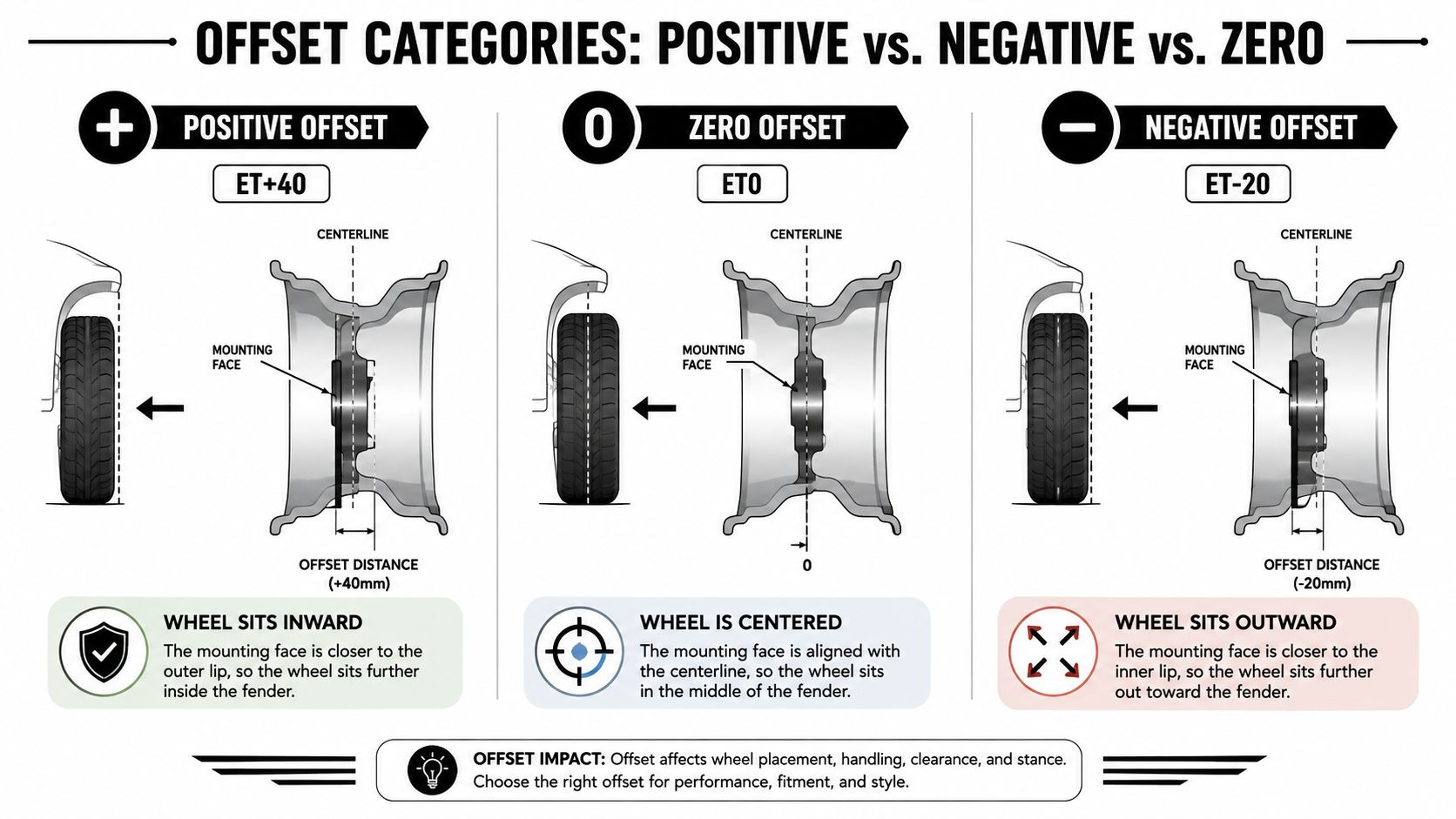
A useful real world example shows why the number is not guesswork. One explanation measures a wheel width of 244 mm, which gives a centreline of 122 mm, then measures 175 mm from the hub face to the same reference point. Subtracting the centreline gives ET53, which is a positive offset. That kind of calculation is the basis of fitment checks because even a few millimetres can change where the wheel sits on the car. The calculation example shows the process step by step.
Reading the measurement
The key point is that offset is recorded in millimetres, not inches. UK technical guides define it as the distance between the wheel's mounting surface and centreline, which is why width and offset have to be read together, not separately.
If you are checking a wheel by hand, the process is straightforward. Find the centreline by halving the wheel width, then compare that centre point with the hub mounting face. The resulting ET number tells you where the wheel will sit relative to the hub.
Useful shortcut: if a wheel is stamped ET35 or ET45, that stamp is telling you the offset directly, so you don't need to calculate it again unless the marking is missing.
What the ET label means
ET is the common marking used on the wheel itself. You'll usually see it on the back of a spoke or inside the barrel, which is why many owners never notice it until they look closely. A wheel marked ET53 sits differently from one marked ET35, even if both share the same diameter and appear similar from the outside.
That's why offset is not a secondary detail. It's part of the wheel's geometry, and it helps determine whether the wheel will sit correctly on the vehicle.
Understanding Positive, Zero, and Negative Offset
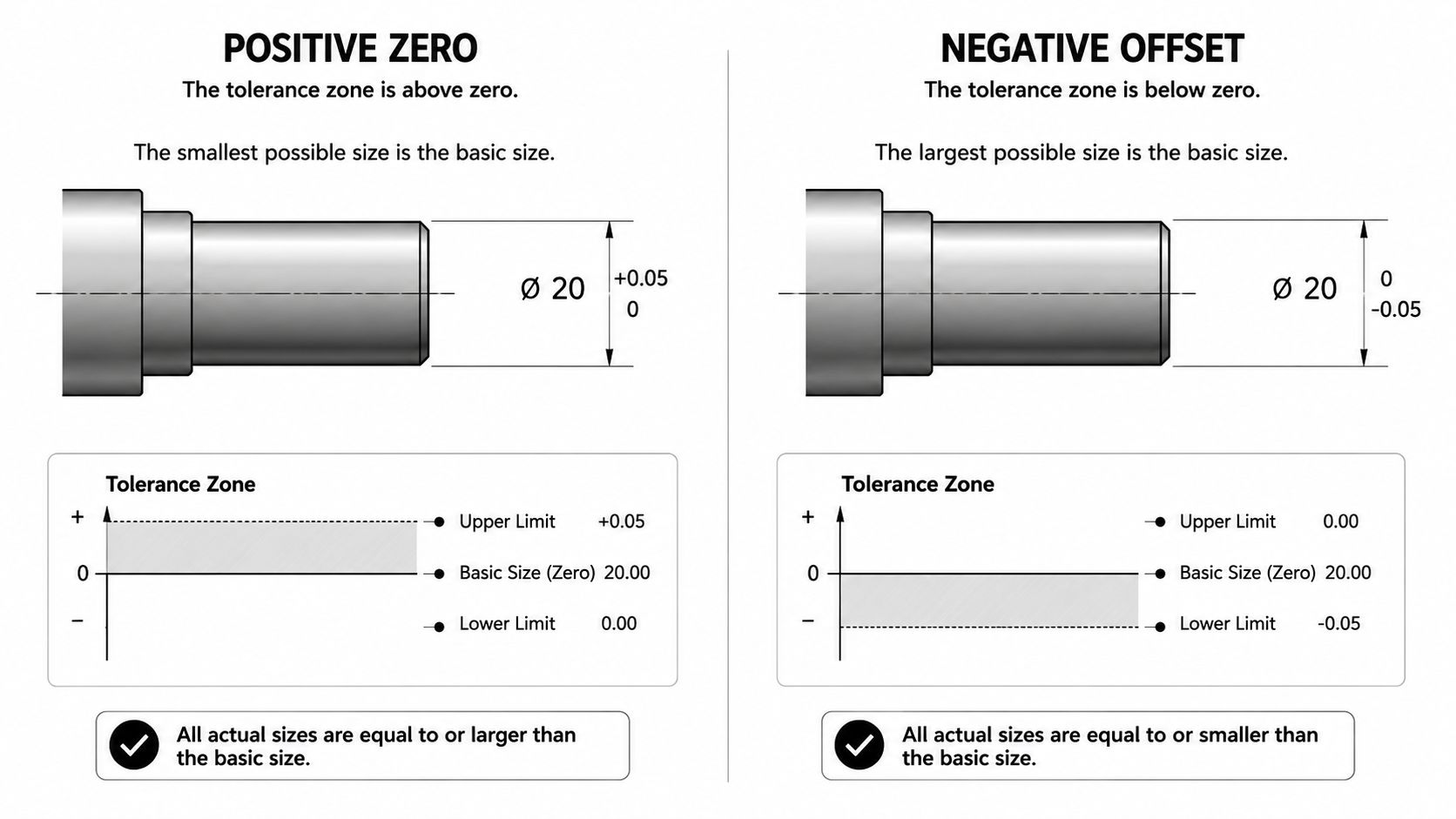
Positive offset means the mounting face sits closer to the outside of the wheel, so the wheel tucks further into the arch. Zero offset, or ET0, places the mounting face on the centreline. Negative offset moves the mounting face inward, which pushes the wheel outward from the hub.
How each one sits on the car
On a standard passenger car, positive offset is the most common. OEM wheels are usually built this way because the wheel sits further inboard, leaving the right clearance around suspension parts and brakes.
Zero offset is the neutral position. The wheel is centred on its mounting plane, so the inner and outer sides of the rim sit evenly from the hub. That is why ET0 is uncommon on normal passenger cars and more often seen on specialist, off road, or modified builds.
Negative offset shifts the wheel outward. Some off road and stance setups use it on purpose, but the position change can create fitment trouble if a car was designed around a positive ET value. A wheel can appear to fit at a glance and still sit too far out for the bodywork or too far from the factory geometry.
Why OEM specification matters
A wheel offset stamp never works in isolation. The car maker has already chosen a wheel position that suits the brake package, the arch shape, and the factory wheel width, so the ET number needs to be read beside the original specification, not as a standalone figure. That is the point many drivers miss when replacing genuine wheels or stepping up to a wider replacement.
If you compare OEM fitment before choosing a new wheel, the picture becomes much clearer, as explained in this wheel and tyre fitment guide. A small change in offset can look harmless on paper, yet still move the wheel enough to affect clearance or stance when the width also changes.
What UK drivers usually see
A practical UK benchmark used by alloy wheel suppliers is +15 to +55 mm for standard passenger cars, with negative values more commonly linked to off road or stance builds, and ET0 described as unusual. That is helpful because it matches how most OEM passenger cars are put together.
For factory replacement work, the goal is to keep the wheel in the original position the manufacturer intended. That protects clearance and preserves the basic geometry the car was built around, which matters just as much as the ET label on the back of the wheel.
How to think about it
- Positive ET: wheel sits inward
- ET0: wheel sits centred
- Negative ET: wheel sits outward
That pattern is easy to remember, but the fit still depends on the OEM wheel specification, including the width the vehicle was designed to accept.
Why Offset and Wheel Width Work Together
Offset by itself doesn't tell you where the rim edges land. A wide wheel with the right ET can still sit very differently from a narrow wheel with the same ET, because the wheel's overall width changes where the inner barrel and outer lip end up.
Width changes the picture
When ET decreases, the wheel protrudes further out. When ET increases, the wheel sits more recessed within the arch. That means a width change without a matching offset correction can move the inner barrel closer to suspension components while also pushing the outer lip toward the wing. UK fitment guidance from Oponeo's wheel width and ET explanation makes the same point, width and ET have to be checked together.
A simple way to think about it is this. If you move from a narrower OEM wheel to a wider one, the wheel grows in both directions unless the ET is adjusted to compensate. Without that adjustment, the car can lose clearance inside the arch or create an outer poke that wasn't there on the original spec.
Why geometry matters
This isn't just about looks. The wrong width and offset combination can alter scrub radius and load paths through the hub, which changes steering behaviour and how forces travel through the car. That is why a wheel that “fits” in a loose sense may still be the wrong choice for the vehicle.
Fitment rule: match the vehicle's approved wheel specification, not a generic size chart.
For buyers comparing options, a useful reference is The Alloy Hub's wheel and tyre fitment guide. It sits alongside the offset discussion because the wheel decision is always about the whole package, not one measurement on its own.
Finding and Reading Your Wheel Offset Stamp
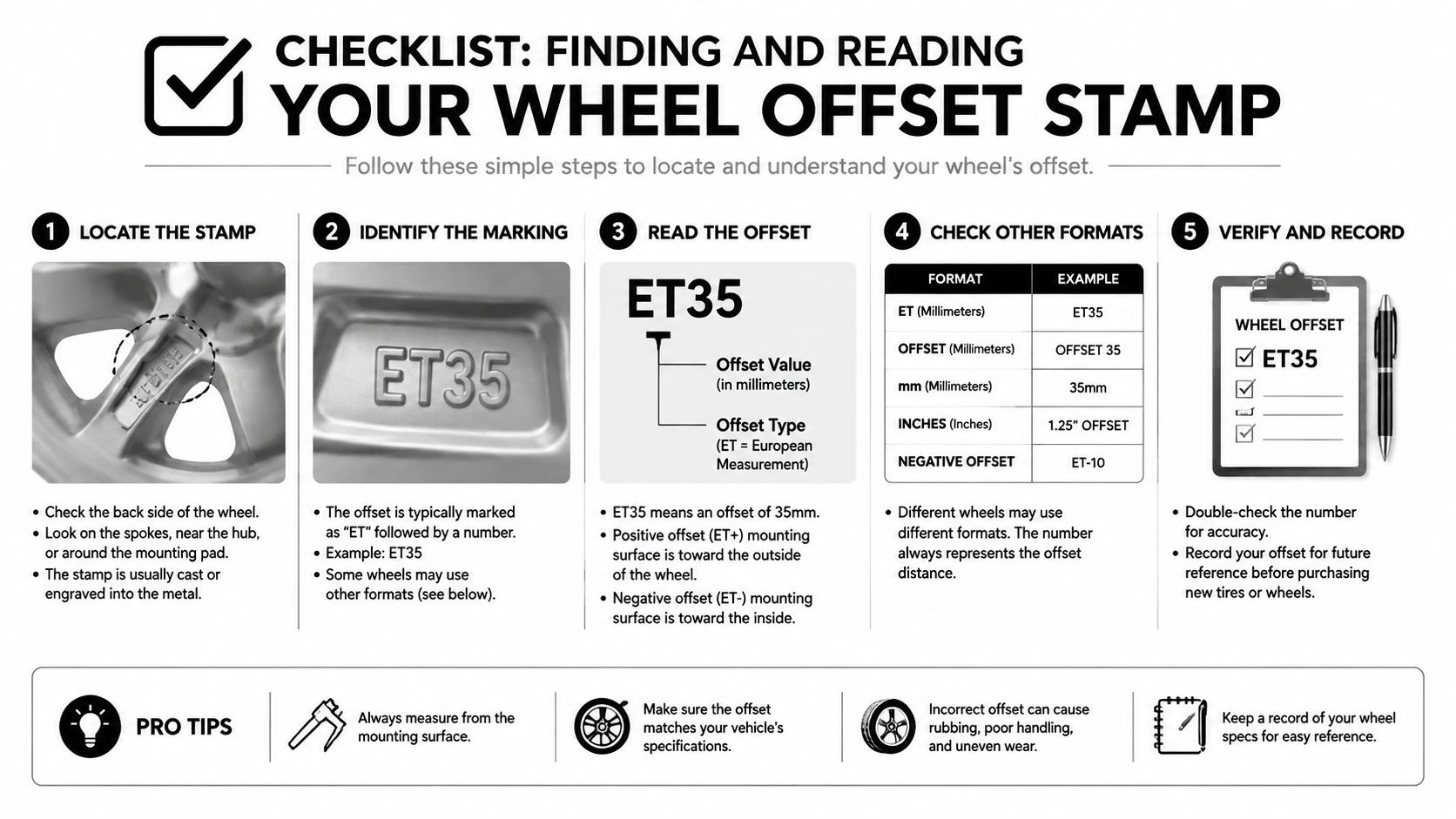
Most genuine OEM wheels carry their offset on the wheel itself. You'll usually find it stamped on the back of a spoke or inside the barrel, and it appears as ET followed by a number, such as ET35 or ET-12. This wheel identification guide is useful if you're trying to confirm what you already have fitted.
What to look for
Start with the wheel face removed from view. Check the rear of the spokes and the inner barrel, because that's where the stamp tends to sit. If the marking is visible, you've got the quickest answer possible.
If the stamp isn't easy to read, the offset can be calculated from wheel width and backspacing using the formula Offset = Backspacing – (Wheel Width ÷ 2). That gives you the ET figure in millimetres, which is the number fitment guides are referring to.
Why the stamp matters
The offset stamp is especially useful when you're matching a replacement to a set that's already on the car. It gives you a direct reference point before you order, so you don't rely on guesswork or on a seller's vague description.
Genuine OEM wheels are much more likely to carry proper identification markings because they're made to manufacturer specification. That helps distinguish them from wheels where the details are unclear or inconsistent, which is where fitment mistakes often start.
Simple check: if you can confirm the ET marking on your current wheel, you're already halfway to a correct replacement order.
Consequences of Wrong Offset
Wrong offset creates tangible problems, not just fitment-chart issues. If the wheel sits too far out, it can contact arch liners or sit beyond the clearance the car was designed around. If it sits too far in, it can rub against suspension components or brake callipers.
What drivers feel
The first signs are often subtle. Steering can feel less settled, the wheel position can look odd in the arch, and tyre wear can begin to follow a pattern that does not match the manufacturer's intended geometry. Because those changes build gradually, the issue may not look serious on day one.
Offset also works alongside wheel width, so a wheel can be wrong even if the ET number sounds close. A wider wheel with the same offset sits differently in the arch, just as moving the mounting point on a shelf changes how far the load sticks out from the wall. That is why OEM wheels matter, they are built around a specific width and offset combination for the car they were designed for.
Why small errors become expensive
A wheel that looks close enough can still be far enough off to create ongoing issues. The cost is not only frustration during fitting. It can turn into repeated corrections, extra wear, and a car that does not steer or sit as it should.
The safest check is to compare the full wheel specification against the original setup before you buy, including the points covered in The Alloy Hub's pre purchase checklist. That matters even more when you are replacing genuine wheels, because OEM fitment depends on the width and ET working together, not on one number in isolation.
Bottom line: the factory offset exists for a reason, and changing it without checking wheel width and OEM specification is usually where avoidable problems begin.
Common Questions About Wheel Offset
A lot of buyers ask the same things once they've got the basics. The answers usually come down to how closely the new wheel matches the OEM specification, not just whether it bolts on.
Is a small offset difference acceptable
Sometimes, but only if the rest of the fitment still works. A wheel that is close on ET may still be wrong if the width changes at the same time. The safest approach is to compare the full wheel spec, then judge the fit against the car's original setup rather than one number in isolation.
Can staggered setups use different offsets
Yes, they can, because front and rear wheels don't always need to be identical. The key is that each axle still needs the right clearance and position for that side of the car. Staggered fitment is normal on some OEM applications, so the question isn't whether the offsets differ, it's whether they match the factory design.
Can spacers fix offset
Spacers can change the wheel position, but they don't turn the wrong wheel into the right OEM wheel. They move the mounting face outward, which alters fitment and clearance in the same way a lower offset does. If the goal is to replace or upgrade a genuine wheel, the correct ET is still the cleanest solution.
What about changing wheel size within the same marque
That's common on factory option wheels and upgrade paths, but the ET still needs checking. Two wheels from the same brand can look similar and still sit differently on the car. If the wheel comes from a different trim or model year, verify the full spec before buying.
When should you ask for help
If the current wheel is damaged, corroded or missing its stamp, it's worth getting the exact spec confirmed before you order a replacement. That's especially true on premium marques where OEM fitment is precise and clearance can be tight.
The Alloy Hub Ltd supplies genuine OEM alloy wheels, single wheels and full sets, and refurbishes damaged wheels in Staffordshire. If you need help matching the correct offset to an existing wheel or replacing one wheel in a set, visit The Alloy Hub Ltd. and check the fitment before you buy.


