
If your Transit MK8 needs accessories, the safest choice is usually genuine Ford or OEM fitment matched to the exact sub variant, not a broad “fits all” listing. The UK market for the Mk8 runs across a long production span, different drivetrains, wheelbases, roof heights, and body styles, so the right part protects load capacity, resale value, and day to day usability.
Table of Contents
- Why Genuine OEM Ford Accessories Are the Smart Choice
- Popular Load Carrying and Exterior Upgrades
- Interior Protection and Security Accessories
- Critical Fitment Notes You Cannot Ignore
- Wheels and Tyres The Foundational Upgrade
- Frequently Asked Questions About Transit MK8 Accessories
Why Genuine OEM Ford Accessories Are the Smart Choice
The smart choice for Ford Transit Mk8 accessories is genuine OEM gear matched to the exact van, because Ford built the accessory range as a model specific programme rather than a loose pile of universal parts. Ford's UK customer guide groups the Transit catalogue into load space, exterior styling, technology, and protection families, which is a strong sign that the parts were developed to work with specific Transit versions, not just the badge on the tailgate Ford UK customer guide.
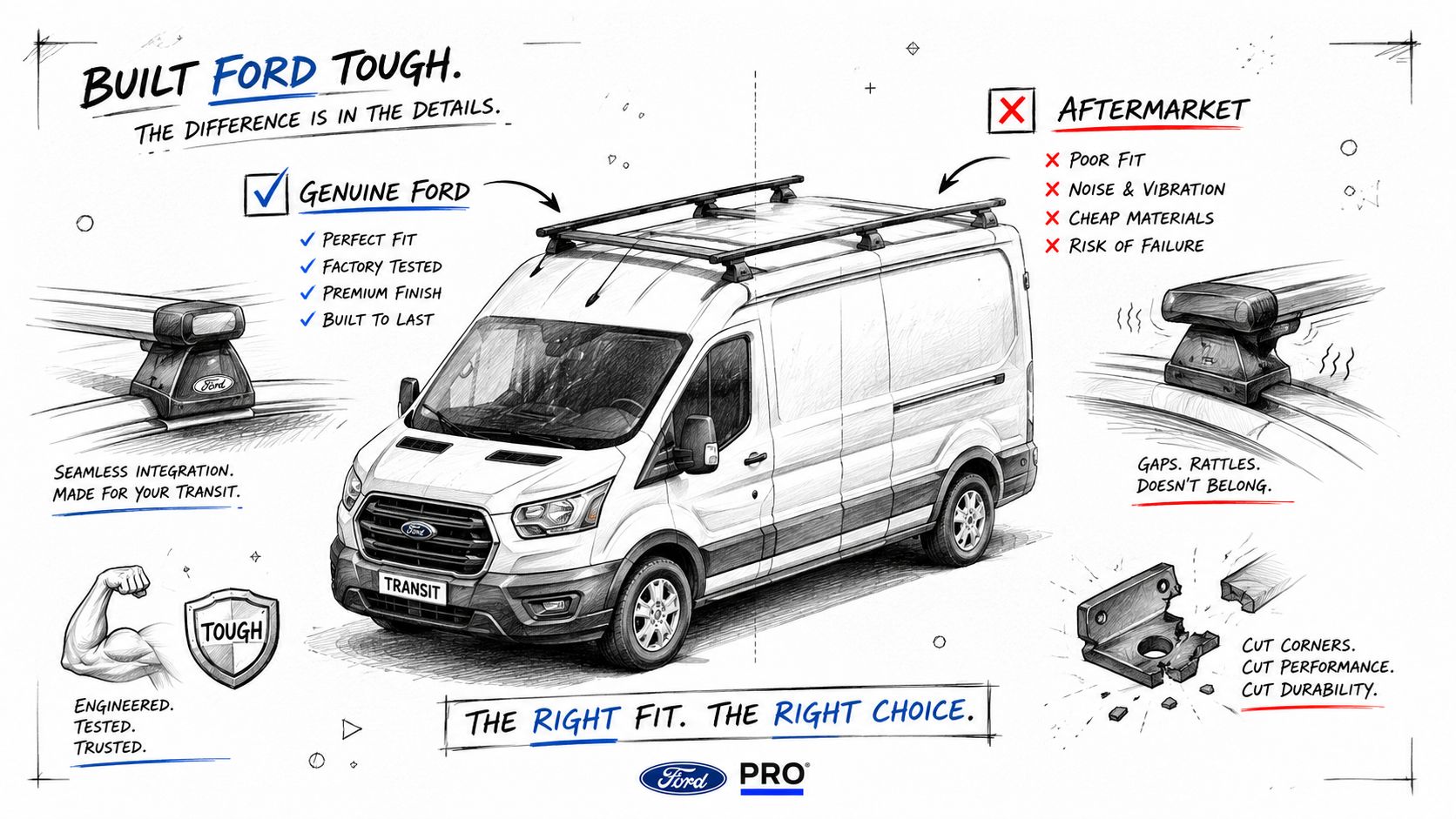
That matters because the Mk8 platform is not a single fitment. A Transit can differ by FWD or RWD, wheelbase, roof height, and body length, so one accessory may suit one van and create problems on another. A part that works on a short wheelbase panel van can sit differently on a long wheelbase model, and the wrong choice can affect clearance, load space, and how the vehicle carries weight.
OEM parts are built around the original mounting points and the vehicle's intended use. That gives you a better chance of clean fitment, fewer rattles, and less trimming, which is important on a working van where access and durability matter as much as appearance.
Practical rule: if the accessory changes how the van carries, loads, or secures gear, exact fitment matters more than appearance.
There is also a resale angle. A tidy Transit with properly matched factory style accessories tends to look cared for, while mismatched parts often make a working van seem harder used than it really is. Buyers of commercial vehicles pay close attention to condition, fit, and whether the van still looks like it has been used within its limits, so genuine equipment can protect value better than parts that look universal or improvised.
For a plain explanation of OEM standards and why they matter, The Alloy Hub's overview of what are OEM vehicle parts is a useful reference point.
Popular Load Carrying and Exterior Upgrades
The accessories Transit owners ask for most are the ones that make the van easier to use every day. Roof systems, tow bars, side steps, and protective exterior parts all have a job to do. If they don't improve carrying, access, or durability, they're usually not worth the fitting effort on a working van.
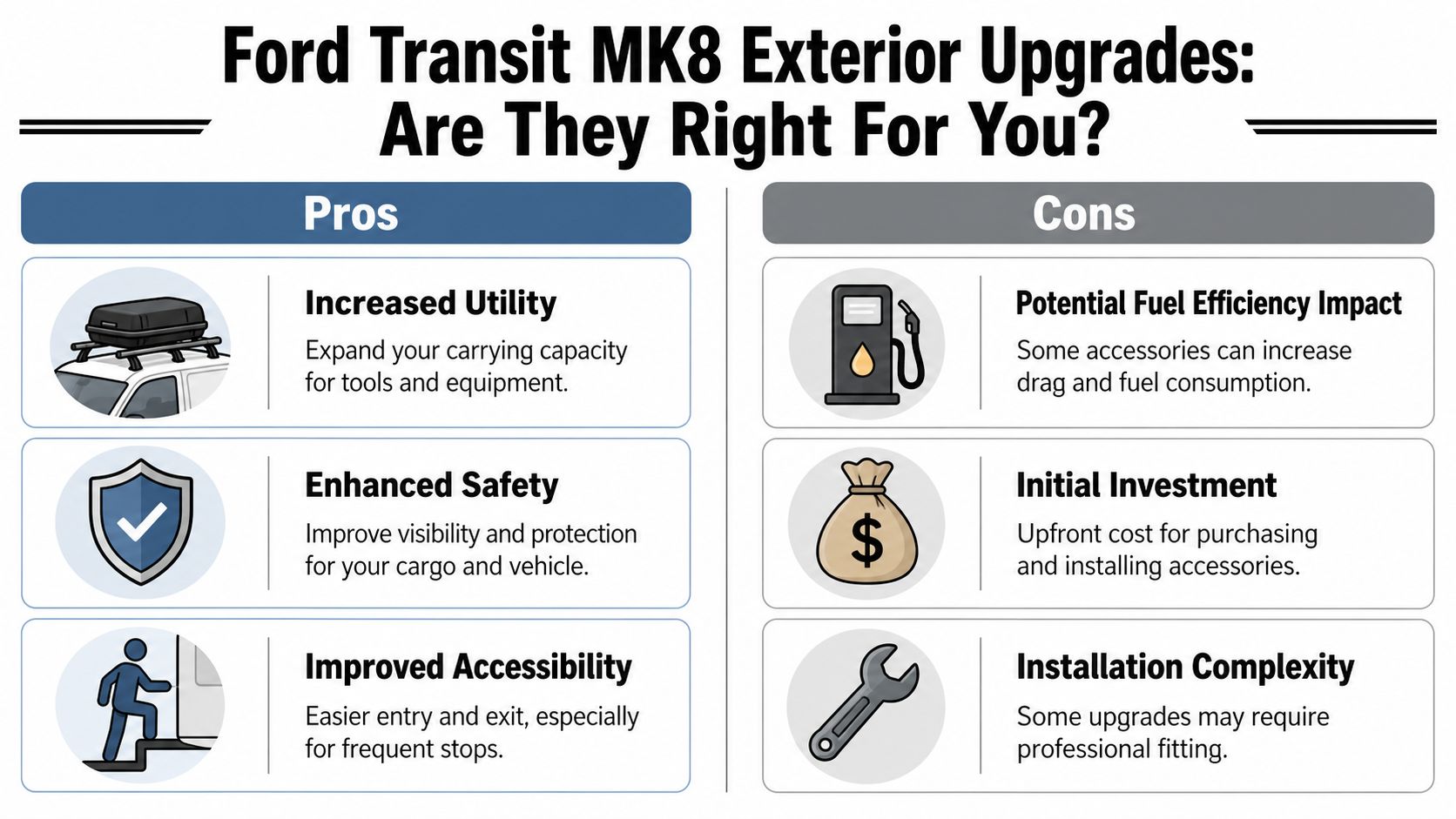
Ford Transit MK8 Exterior Upgrades: Are They Right For You?
| Pros | Cons |
|---|---|
| Increased Utility, more room for tools and equipment on roof systems or towable load solutions | Potential Fuel Efficiency Impact, extra drag can add cost in daily use |
| Enhanced Safety, better protection for cargo and easier handling around the van | Initial Investment, quality parts cost more upfront |
| Improved Accessibility, easier entry and exit for frequent stops | Installation Complexity, some parts need proper fitting for safety and alignment |
A roof rack or roof system only makes sense if it matches the van's body style and the actual load you carry. A heavy duty van that's already close to its working limit needs accessories chosen with care, not just whatever happens to bolt on. That's especially true when the same Mk8 badge covers different wheelbases and roof heights.
Side steps are a good example of why published engineering details matter. A typical Transit Mk8 side step kit is listed with 76 mm bar diameter, 2 mm wall thickness, and a 115 kg static load test Vanimal side steps. Those figures are there for real use, not styling. A step on a work van has to hold up to regular entry with boots, tools, wet weather, and repeated loading.
A van accessory that doesn't state its load rating is asking for trouble on a commercial vehicle.
Tow bars are similar. The right one depends on the body and the rear structure, especially if the van has a specialist build or extra rear equipment. The wrong choice can create fitment headaches later, even if the part looked fine on a product page.
Interior Protection and Security Accessories
Interior accessories make sense when they keep the van in serviceable condition. Ply lining, floor protection, seat covers, and steel bulkheads don't exist to look tidy, they exist to stop daily use turning into avoidable wear. On a Transit MK8 used for trade work, that protection directly affects how the van presents at part exchange or resale.
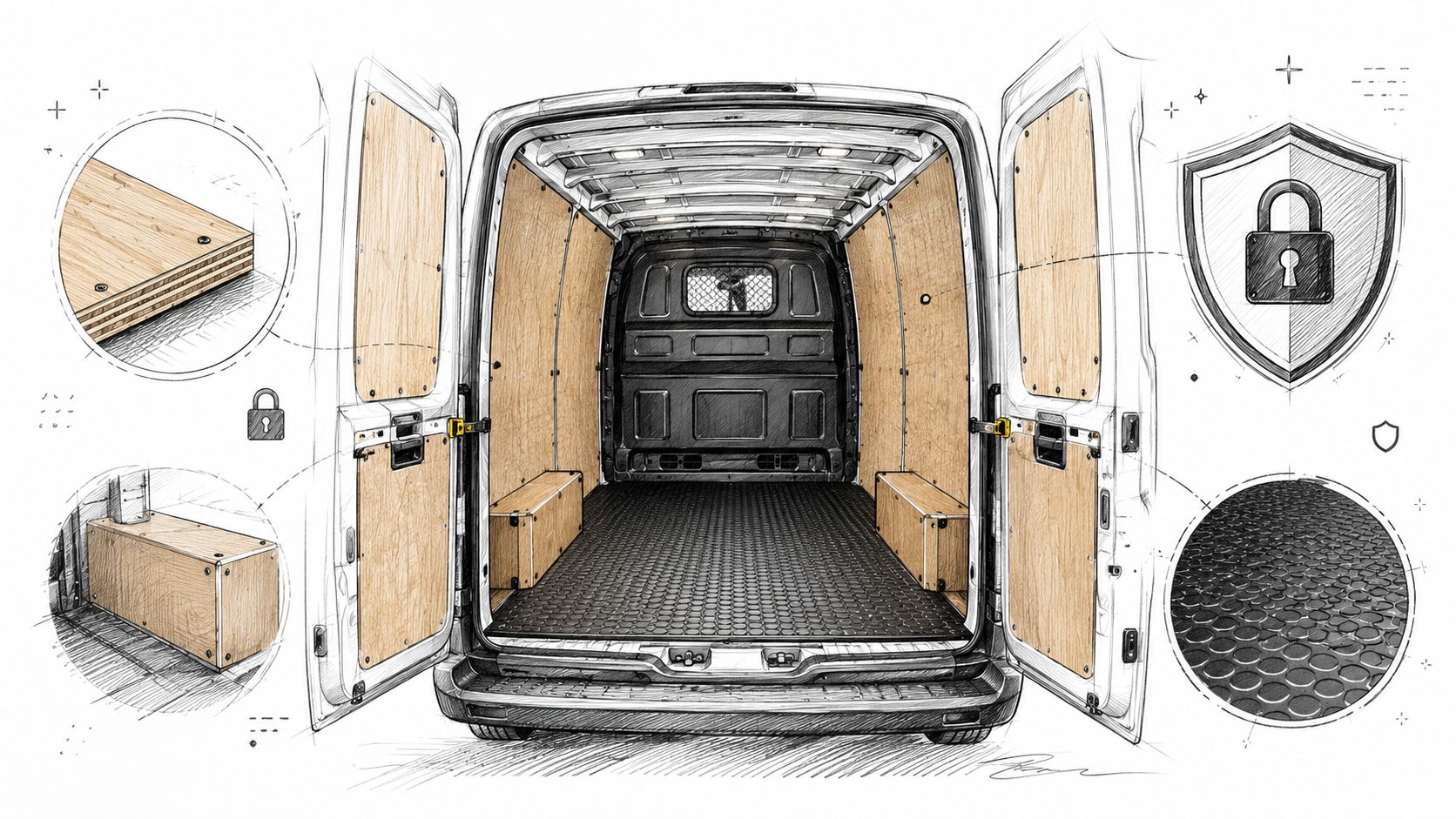
A lined load area takes abrasion better than bare metal. Rubber flooring helps stop tools and boxes sliding around, and a bulkhead can keep loose cargo from shifting into the cab. The effect is simple, the van stays cleaner, sounds less battered, and usually feels more credible to the next buyer.
Security is the other half of the story. Many accessory pages over focus on trim and styling, but theft prevention and load security are more useful for businesses that carry tools or expensive kit. A good practical companion piece is Blade Auto Keys' guide on how to stop car theft, because the same habit of hardening access points and protecting valuables applies to vans as much as cars.
The useful question isn't what looks smart, it's what keeps the van earning. Secure internal storage, stronger barriers, and lockable protection do more for uptime than cosmetic add ons. They also help the van feel like a maintained business asset rather than a soft target parked at a job site.
If a Transit is part of a fleet or used by a sole trader, that distinction matters. Lost tools mean lost working time, and lost working time costs more than most accessories ever will. That's why security and protection should be treated as operational choices, not optional extras.
Critical Fitment Notes You Cannot Ignore
The biggest mistake with Transit Mk8 accessories is treating “MK8” as one universal fitment. It isn't. Axle type, drivetrain, wheelbase, roof height, and body style all change what will physically fit and what will work properly.
For wheel related hardware, the split is especially important. Some Transit MK8 rear axle parts are listed with a 122.5 mm centre diameter and 6×13.5 mm holes, while other MK8 braking listings use a 160 mm PCD, which means the axle configuration changes the matching hardware Bison Parts. If you assume one Mk8 part covers every van, you can end up with the wrong mounting pattern, the wrong centre bore, or a component that looks close but won't sit correctly.
What buyers should check first
Before ordering anything that attaches to the van, confirm these points in the listing and on the vehicle:
- Drivetrain type, FWD, RWD, or 4×4
- Wheelbase, SWB, MWB, or LWB
- Body style, panel van, chassis cab, or specialist build
- Rear axle details, because axle dependent parts can differ even inside the same model family
- Wheel fitment data, including PCD and centre bore where relevant
That's why a generic “fits Transit Mk8” description isn't enough. A part can be correct for one rear axle and wrong for another, even though both vans wear the same badge.
For wheel buyers, the same logic applies to the exact component spec. A useful reference on the technical side is what is alloy wheel PCD, because the bolt pattern is one of the first things that separates a proper fit from an expensive mistake.
Rule of thumb: if the seller can't state the exact Mk8 sub variant, keep looking.
Good catalogues save money. They segment by year, axle, and body rather than pretending the whole Transit range is one interchangeable platform. For a van that earns its keep, that level of detail is not fussy, it's essential.
Wheels and Tyres The Foundational Upgrade
A Transit MK8 on the wrong wheels can still look tidy from a distance, but it will never feel right under load. Wheel choice affects load carrying, hub compatibility, appearance, and how the van behaves when it is working hard. The long 2014 to 2021 production run created a broad UK market for compatible parts, and Ford's brochure shows a platform built to handle up to 3,500 kg gross vehicle weight.
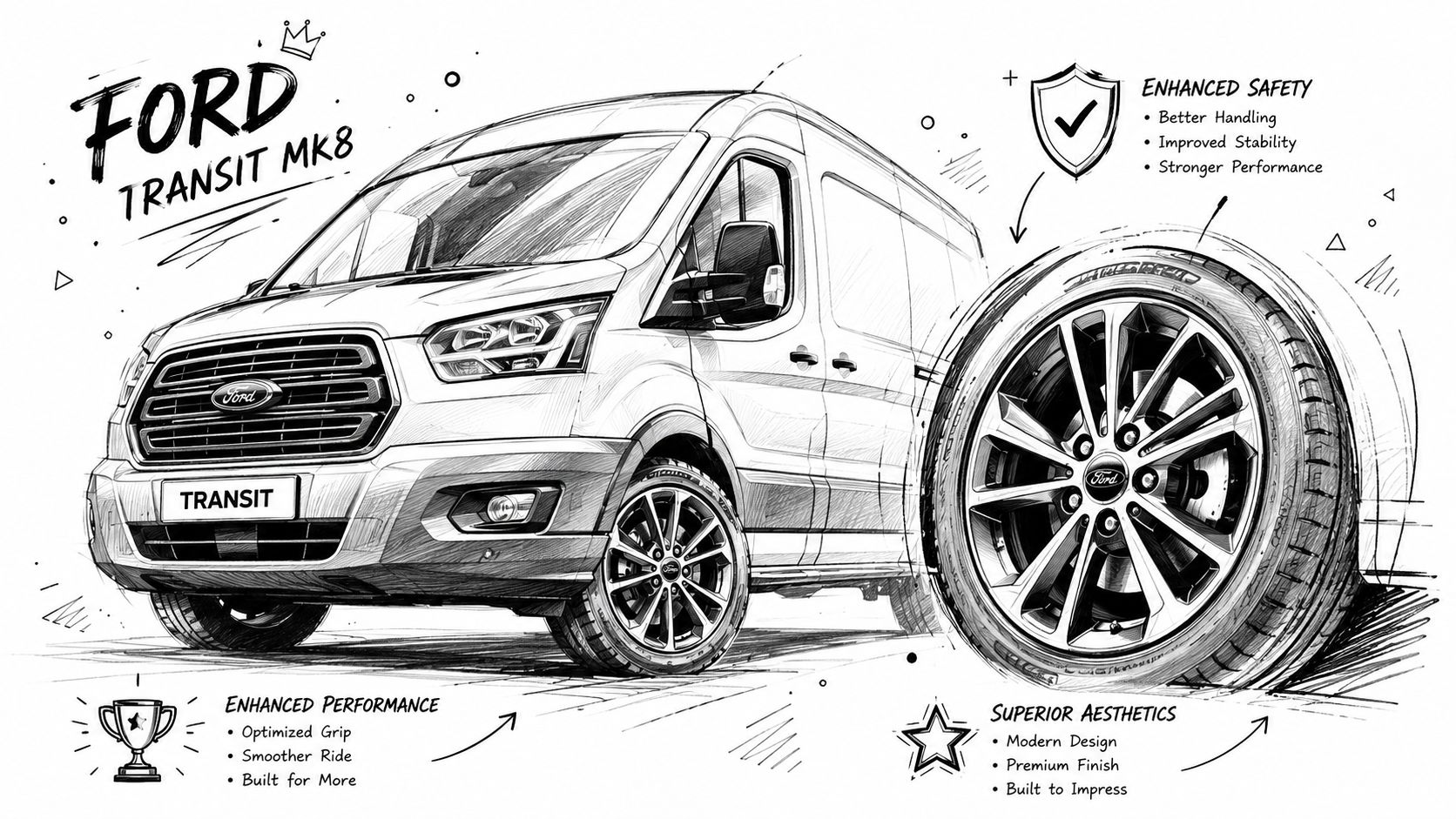
That makes genuine OEM alloy wheels the safer route for a working van. The wheel has to suit the axle, carry the load, and sit correctly on the hub without relying on guesswork. Replica wheels may look close, but appearance does not prove compatibility once load rating, centre fit, and hub matching are checked against the vehicle. The difference matters even more on vans that are expected to earn their keep every day.
The practical upgrade choices
Most owners end up choosing between three sensible routes.
- Replace a damaged OEM wheel, when one wheel no longer matches the set or is beyond sensible refurbishment
- Upgrade to a genuine Ford alloy, if the van was supplied on steels but the correct factory wheel exists for the model
- Refresh the existing set, if the wheels are structurally sound but look tired
Tyre choice has to sit beside the wheel choice, not after it. If the rolling radius changes too much, the van can feel wrong on the road and the setup becomes harder to defend on a commercial vehicle. That is why wheel and tyre checks should be done together, using exact fitment data rather than matching by appearance alone. For a practical reference, comparing wheel and tyre fitment helps keep the decision focused on compatibility instead of assumptions.
The sub-variant matters here as well. FWD and RWD Transits do not share every wheel and tyre requirement, and SWB, LWB, and pre or post-facelift details can change what is acceptable. A wheel that fits one Mk8 can still be wrong for another, even if the van badge looks identical.
TPMS sensors need the same care. If the wheel change disrupts sensor transfer or sensor compatibility, the owner ends up with warning lights and a job that looks finished but still needs sorting.
Trade-in can also make sense if the old wheels still have value. Removing the old set and taking credit against the replacement keeps the upgrade tidy, and it stops usable OEM wheels going to waste.
Frequently Asked Questions About Transit MK8 Accessories
Do all Transit MK8 accessories fit every van from 2014 to 2021?
No. The Mk8 range covers different axle layouts, wheelbases, roof heights, and body styles, so fitment has to be checked against the exact van. A listing that only says Mk8 can still be wrong for your specific Transit.
Are factory Ford accessories better than universal parts?
For a working Transit, usually yes. Ford's accessory programme is model specific and grouped by function, which means the parts are built with the van's structure and use case in mind. That improves fit, durability, and how the van presents later.
Do side steps and roof systems affect how the van works?
They can. Side steps improve access, but they need a proper load rating and correct length. Roof systems increase carrying options, but they must suit the van's body and the load you expect to carry.
Why does axle type matter so much on the Mk8?
Because FWD and RWD hardware isn't interchangeable in all cases. Rear axle dimensions and wheel related specs can differ, so a part that looks right may still be wrong for the mounting pattern or centre fit.
Is it worth buying genuine wheels for a Transit?
If the van carries weight, yes. Genuine wheels are matched to the vehicle's structure and load needs, which is exactly what you want on a commercial van. They also tend to support resale better than mismatched alternatives.
The Alloy Hub Ltd supplies genuine OEM alloy wheels and refurbishes damaged sets for owners who need correct fitment and a clean factory style finish. If your Transit MK8 needs a replacement wheel, a matched set, or a proper compatibility check, visit The Alloy Hub Ltd. and speak to a specialist who can help you choose the right OEM option.


